

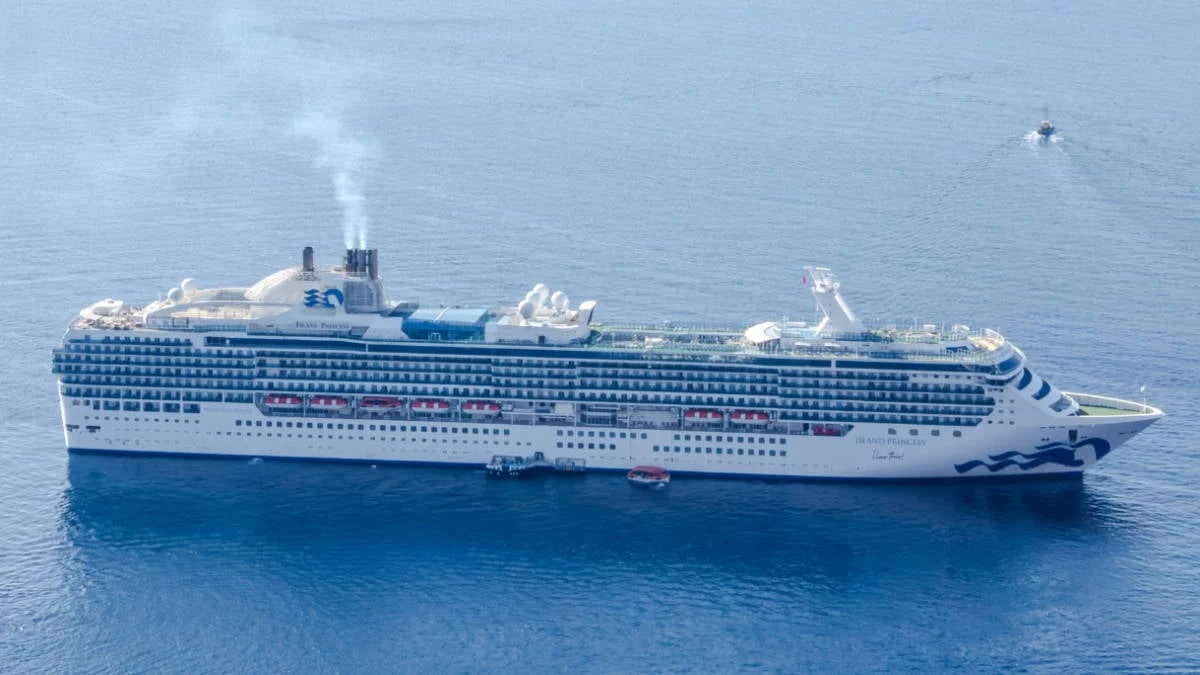
SOUDA, GREECE — A somber atmosphere settled over the Island Princess on Wednesday, October 28, 2026, as Princess Cruises confirmed the death of an American passenger shortly before the vessel docked in Souda, Greece. The 69-year-old man was discovered unresponsive in his stateroom by his wife, prompting an immediate medical response from the ship’s onboard staff. Despite their efforts, the guest could not be revived and was pronounced dead.
Local authorities and regional news outlets, including the Greek media outlet Parakritika, reported that the passenger succumbed to natural causes. While the tragedy cast a heavy shadow over the final days of the voyage, officials confirmed there is no indication of foul play. Out of respect for the grieving family and to comply with privacy regulations, further personal details regarding the deceased have been withheld by both the cruise line and local authorities.
The unexpected death triggered mandatory international maritime and consular protocols, resulting in a brief delay to the cruise ship’s scheduled itinerary as authorities coordinated the complex logistics surrounding the handling of human remains at sea.
1. Main Facts and Incident Overview
The incident occurred during the latter stages of a grand 25-night transatlantic voyage that set sail from Port Everglades in Fort Lauderdale, Florida, on Tuesday, October 6, 2026. The 2,210-passenger Island Princess was navigating the Mediterranean Sea, making its way toward the Greek port of Souda on the island of Crete, when the medical emergency unfolded.
- The Deceased: A 69-year-old male citizen of the United States.
- Cause of Death: Attributed to natural causes, discovered by his wife inside their stateroom.
- Vessel: Island Princess (a Coral-class cruise ship operated by Princess Cruises, flagged in Bermuda).
- Location of Incident: Aboard the ship as it approached Souda, Greece.
- Operational Impact: A brief 30-minute departure delay from Souda as local authorities and ship agents cleared the necessary legal and administrative hurdles.
Cruise line representatives, maritime lawyers, and international health agencies emphasize that while passing away on a cruise ship is statistically rare, it is an eventuality for which major cruise lines are thoroughly prepared. Modern cruise ships are equipped with specialized medical centers, fully functioning onboard morgues, and strict procedural frameworks designed to manage such distressing occurrences with the utmost dignity and legal compliance.
2. Chronology of Events: From the Aegean Sea to Port Procedures
The sequence of events on Wednesday, October 28, 2026, required swift coordination between the ship’s command, onboard medical personnel, Princess Cruises’ shore-side care teams, and Greek port authorities.
Morning Approach to Souda
As the Island Princess made its final approach to Souda, Crete, shipboard staff were alerted to a medical emergency within a passenger stateroom. Upon entering the room, medical personnel determined that the 69-year-old American guest was unresponsive. Life-saving measures were initiated, but the guest was ultimately pronounced dead. The man’s wife was immediately provided with pastoral care and continuous support from the ship’s dedicated customer service and care team.
Port Arrival and Regulatory Intervention
Because the Island Princess is a foreign-flagged vessel (registered in Bermuda) currently operating in Greek territorial waters, the ship could not simply disembark the deceased passenger without formal clearance from Hellenic authorities. Transporting human remains across international borders requires a strict chain of custody, official medical certification, and coordination with local coroners and consular officials.
Under international maritime law and local port regulations, the vessel’s captain and shipping agents contacted local Greek port police, health inspectors, and the U.S. consular representation to report the death and initiate the required protocols.
The Brief Departure Delay
Automated Identification System (AIS) tracking data later confirmed that the administrative and legal clearance processes caused a minor disruption to the ship’s timetable. While Island Princess was originally scheduled to depart Souda at 8:00 p.m. local time, the vessel ultimately cast off lines at approximately 8:30 p.m.—a delay of just 30 minutes.
Despite this brief setback, the ship’s officers successfully adjusted navigation speeds to ensure the itinerary remained largely intact. AIS tracking verified that the Island Princess arrived safely at its next scheduled destination, Santorini, on the morning of Thursday, October 29.
3. Supporting Data and Itinerary Context
The Island Princess was nearing the conclusion of an extensive, highly scenic 25-night journey that bridged the Atlantic Ocean and the Mediterranean basin.
The Transatlantic Itinerary
The voyage commenced on October 6, 2026, departing from Fort Lauderdale, Florida. Over the course of nearly four weeks, the ship traversed the Atlantic, calling at breathtaking ports of call that included:

- Bermuda
- The Azores (Portugal)
- Mainland Spain
- France
- Italy
The Greek Isles Finale
The call to Souda marked the beginning of a magnificent Hellenic finale for the cruise. It was the first of three scheduled port stops in Greece designed to give guests a taste of ancient history and island culture before the voyage officially concludes. Following Souda and the subsequent stop in Santorini, the ship was scheduled to visit Mykonos before completing its journey in Piraeus (the port of Athens) on Saturday, October 31, 2026, where passengers were slated to disembark.
The distance between Souda (Crete) and Santorini is roughly 100 nautical miles. Typically, the ship maintains a comfortable cruising speed overnight, allowing travelers to enjoy a full day of sightseeing in Santorini, where the ship was planned to dock from 7:00 a.m. to 9:00 p.m.
4. Official Protocols and International Legal Implications
When a passenger passes away during an international cruise, the logistical challenges are immense. The process involves navigating a web of maritime law, domestic regulations in the ship’s flag state, local laws in the port of call, and the repatriation laws of the deceased traveler’s home country.
Jurisdiction and Foreign-Flagged Realities
Because major cruise ships like the Island Princess are typically registered outside the United States—in this case, Bermuda—they operate under the flag state’s maritime laws while adhering to international conventions (such as SOLAS and MARPOL). When a death occurs on board:
- Medical Pronouncement: The ship’s onboard physician officially pronounces the time and cause of death.
- Flag State and Port State Notification: The ship must notify the maritime authorities of the country where the ship is currently docked or anchored (in this case, Greece).
- Consular Notification: The ship’s management coordinates directly with the embassy or consulate of the deceased person’s home country (the United States Embassy in Athens) to facilitate consular reports of death abroad.
Repatriation Requirements Defined by the CDC
Bringing a human body back into the United States from abroad is subject to stringent federal regulations. According to the U.S. Centers for Disease Control and Prevention (CDC), the repatriation process requires:
- Notification of consular personnel at the nearest U.S. embassy or consulate.
- Obtaining official export clearance documents from the foreign government (Greece).
- Securing the necessary import documents for entry into the United States.
- Ensuring appropriate packaging, embalming, or cremation certificates, depending on whether a casket or cremated remains are being transported.
- Completing a death certificate issued by local medical authorities in the jurisdiction where the death or processing occurred.
These multifaceted bureaucratic steps explain why a cruise ship cannot simply offload human remains at any given port without prior clearance, and why port delays—though inconvenient for sightseeing passengers—are sometimes unavoidable.
5. Onboard Capabilities: Medical Facilities and Morgue Operations
While experiencing a death on a vacation cruise is distressing, the cruise industry has developed standardized, highly discreet procedures to handle such events safely and respectfully.
Are Cruise Ships Equipped for Deaths?
Yes. Major cruise vessels feature fully equipped onboard medical centers staffed by licensed physicians and nurses capable of handling acute medical emergencies, intensive care, and palliative situations.
Furthermore, contrary to popular misconceptions, cruise ships do have onboard morgues (refrigerated holding facilities). These secure, private compartments are located away from passenger areas and are utilized by ship security and medical staff to safely store human remains until the vessel reaches a port where local authorities can properly receive the body and coordinate shore-side funeral directors or repatriation services.
Passenger Privacy and Support
Cruise lines maintain strict confidentiality policies. Information regarding the identity of deceased guests or the specific details of medical interventions is rarely publicized by the line, protecting the grieving family from media intrusion. Specially trained care teams on board Island Princess worked closely with the passenger’s wife, arranging for shore-side consular support, communication with relatives back home, and logistical assistance for her departure from the ship.
6. Conclusion and Industry Response
As of press time, Princess Cruises has not issued a detailed public statement regarding the individual circumstances of the incident, adhering to standard industry practices that prioritize family privacy during times of personal tragedy. Maritime journalists and industry observers have noted that the ship’s crew handled the delicate situation with professionalism, minimizing disruption to the broader passenger base while ensuring the necessary legal protocols were rigorously followed.
The thoughts and deepest condolences of the maritime community, cruise enthusiasts, and editorial staff go out to the family, friends, and traveling companions of the deceased passenger during this profoundly difficult time. Meanwhile, the Island Princess continues its scheduled voyage toward its final destination in Piraeus, bringing to a close a transatlantic adventure marked both by extraordinary travel experiences and an unexpected moment of sorrow.
 Asep Darmawan
 Nana Wu
 Sagoh
