

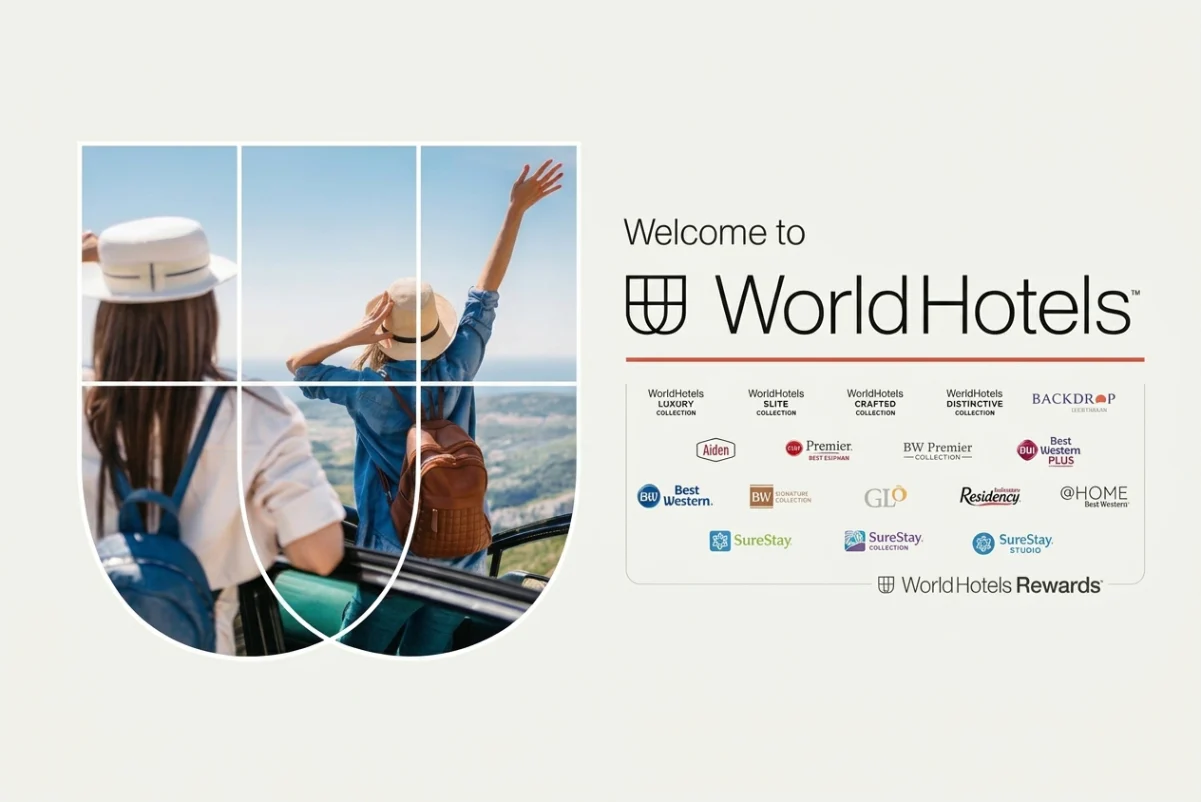
In a move that marks a definitive turning point in its corporate history, BWH Hotels—the parent organization behind the ubiquitous Best Western brand—has officially announced a comprehensive rebranding initiative. Moving forward, the global hospitality powerhouse will operate under the name WorldHotels.
The announcement, delivered to hotel owners and stakeholders during the company’s annual convention in Phoenix, Arizona, signals a desire to decouple the corporate identity from its most famous, yet historically restrictive, legacy brand. While the individual identities of the company’s 18 distinct brands will remain intact, the transition represents a fundamental shift in how the organization positions itself in an increasingly crowded and fragmented global travel market.
The Core Facts: A Name Change with Global Ripples
The rebranding effort, while subtle in its impact on the guest experience at the individual property level, is monumental from a corporate governance and brand architecture perspective.
Under the new structure, BWH Hotels—previously known as Best Western International—will transition to the WorldHotels moniker. Crucially, the 18 brands within the portfolio will retain their current names. A Best Western will remain a Best Western, and an Aiden property will remain an Aiden. However, the internal hierarchy is being reorganized to emphasize a more diverse, global, and multi-segment approach to hospitality.
Perhaps the most significant tangible change for the consumer will occur on January 5, when the company’s two distinct loyalty programs—Best Western Rewards and WorldHotels Rewards—will officially merge into a single, unified entity under the WorldHotels banner. This consolidation is designed to streamline the guest experience, offering a more cohesive ecosystem for travelers moving between the company’s luxury, boutique, upscale, extended-stay, and economy offerings.
Chronology: From Single-Brand Cooperative to Multi-Brand Giant
To understand why this rebranding is occurring now, one must look at the company’s rapid evolution over the last decade and a half.
- 2010 – The Single Brand Era: For decades, the organization was synonymous with the Best Western name. Its growth was steady but concentrated, relying almost exclusively on the core brand that made it a household name in the mid-20th century.
- 2019 – The Acquisition of WorldHotels: A major turning point occurred when the organization acquired the WorldHotels collection. This provided the company with an immediate footprint in the luxury and upscale boutique segments, markets where the "Best Western" brand name historically struggled to compete due to consumer perception.
- 2020–2023 – Aggressive Portfolio Expansion: In the years following the acquisition, the group embarked on a period of intense growth. By diversifying its portfolio into extended-stay (the @Home brand) and further refining its lifestyle offerings, the group grew from one brand in 2010 to 18 by 2024.
- October 2026 – The Phoenix Convention: During the annual convention, CEO Larry Cuculic formally unveiled the WorldHotels identity to the cooperative’s membership, marking the formal end of the BWH Hotels era.
Supporting Data: The Case for Rebranding
The decision to move away from the BWH Hotels name is rooted in data regarding consumer perception and market saturation. According to leadership, the company’s current corporate name has failed to keep pace with the reality of its business model.
The Perception Gap
Internal surveys conducted by the company revealed a "perception lag." While the organization has successfully diversified into high-end luxury, boutique, and extended-stay segments, the general public still largely views the organization solely through the lens of its legacy mid-scale brand. This creates a significant barrier to entry when trying to attract luxury travelers who may associate the corporate parent exclusively with economy-class lodging.
Portfolio Diversification Metrics
- 18 Distinct Brands: Spanning from economy to luxury.
- Global Reach: A presence in over 100 countries and territories.
- Loyalty Integration: The merger of two loyalty programs aims to capture a wider share of the "traveler wallet," encouraging members to stay within the network as they move through different stages of their careers and travel needs.
"We’ve evolved faster than public awareness," CEO Larry Cuculic noted during an interview following the announcement. "Travelers only know us as a portion of our portfolio. We needed a corporate identity that reflects the totality of our scale, not just our history."
Official Responses and Internal Dynamics
The transition has not been without friction. Because the company operates as a one-hotel, one-vote cooperative, the relationship between the board and its members is unique.
The CEO’s Stance
Larry Cuculic has framed the move as an existential necessity for growth. By decoupling the parent brand from Best Western, the company aims to provide its boutique and luxury properties with more "brand air," allowing them to market themselves without the immediate weight of the mid-scale association. Cuculic maintains that the change is about professionalizing the parent entity to match the quality of its current portfolio.
The Cooperative’s Internal Politics
The move has surfaced underlying tensions within the cooperative. BWH has historically been defined by its democratic structure, where members—the hotel owners—have a direct say in the organization’s direction. Because three-quarters of the hotels in the portfolio still carry the Best Western name, the move to rename the parent company "WorldHotels" has caused some unrest among members who feel that the identity of the group is being shifted away from the brand that built the cooperative’s wealth.
Crucially, it has been noted that members did not receive a formal vote on this specific rebranding change, a fact that has led to internal discussions regarding the extent of the board’s executive power versus the cooperative’s traditional democratic ideals.
Implications: What This Means for the Future of Hospitality
The rebranding of BWH Hotels to WorldHotels carries several significant implications for the hospitality industry at large.
1. The Death of the "Single-Brand" Legacy
This shift mirrors a broader trend in the hospitality sector. Just as Marriott, Hilton, and Accor have successfully transitioned from single-brand entities into multi-brand "houses of brands," WorldHotels is signaling that it no longer wishes to be a specialist in one segment. It is positioning itself as a comprehensive travel platform.
2. Loyalty Program Consolidation
The merger of the two loyalty programs is a tactical move to increase "share of stay." By creating a single, tiered loyalty experience, WorldHotels hopes to incentivize guests to choose its properties across the entire spectrum. A business traveler who stays at a Best Western for a quick stopover can now earn status that benefits them when they book a luxury WorldHotels property for a family vacation.
3. Market Positioning
By adopting the "WorldHotels" name, the company is attempting to elevate the prestige of its entire corporate structure. The name itself suggests a global, premium, and sophisticated reach. This is a clear attempt to compete more directly with the "Big Three" (Marriott, Hilton, and IHG) by providing a unified corporate image that can house diverse brand tiers without diluting the prestige of the upper-end properties.
4. Challenges Ahead: Maintaining the Cooperative Spirit
The most significant hurdle for the new WorldHotels organization will be maintaining the buy-in of its membership. A cooperative’s strength lies in the alignment of its members. If the members feel the corporate office is prioritizing global branding initiatives over the immediate profitability or brand recognition of the individual property owners, the cohesion of the group could be threatened.
The transition to WorldHotels is more than a change of signage; it is a declaration of intent. The organization is betting that its future lies not in its past, but in its ability to manage a complex, multi-faceted portfolio under a new, more aspirational identity. Whether this pivot will satisfy both the modern, diverse guest and the traditional, cooperative-minded owner remains the central question of the company’s next chapter.
As of January 5, the global stage will see a new player under an old name, ready to test whether a massive, historically grounded cooperative can successfully pivot to compete in the ultra-competitive landscape of global, luxury-oriented hospitality.
 Layla Zulfa
 Iffa Jayyana
 Azzam Bilal Chamdy
