

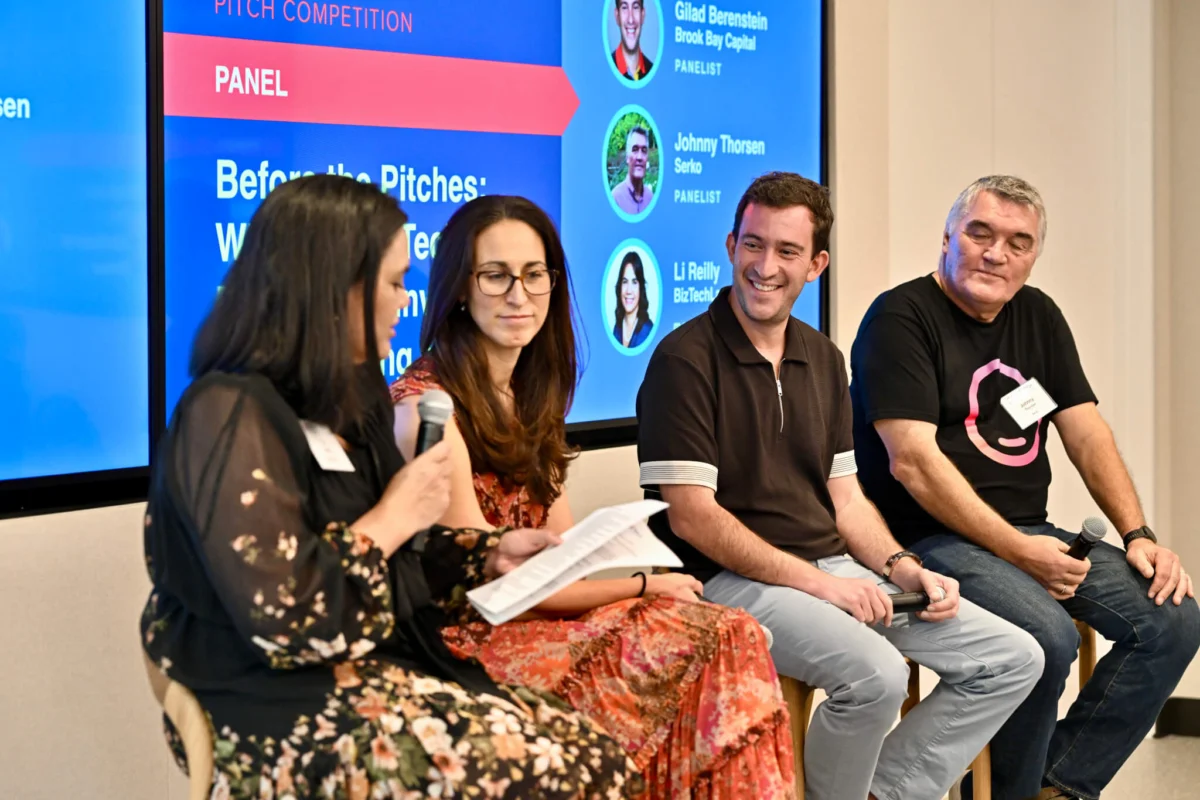
NATIONAL LANDING, V.A. — In an era where artificial intelligence has democratized access to sophisticated software development, the barrier to entry for travel tech start-ups has paradoxically become both lower and more treacherous. At the Travel Tech Association’s (Travel Tech) second annual Start-Up Summit, held on October 14 in Arlington, Virginia, industry titans from Amazon, Hilton, Serko, and Brook Bay Capital converged to deliver a sobering message: having a good idea is no longer enough. To survive the current market, founders must master the art of differentiation, solve acute customer pain points, and possess the institutional endurance to weather the grueling, multi-year sales cycles of the enterprise sector.
The event, which brought together a high-level coalition of founders, venture capitalists, and corporate travel executives, served as a diagnostic look at the health of the travel innovation ecosystem. Amidst the hype cycle of generative AI, the consensus was clear: the industry is entering a phase of "survival of the most relevant."
The Competitive Landscape: Why "AI-First" is No Longer a Moat
The opening panel, moderated by Li Reilly, Fractional General Counsel to Travel Tech, set the tone for the day. The central thesis of the discussion was that AI has commoditized the "tech" part of travel tech. Because almost every start-up now utilizes the same foundational large language models (LLMs) and APIs, the competitive advantage—or "moat"—that a company could once claim has eroded significantly.
Gilad Berenstein, Founder of Brook Bay Capital, highlighted the "sea of sameness" currently flooding investor inboxes. "Many of the pitches I receive are hard to tell apart," Berenstein noted. "When every company claims to use AI to optimize bookings or personalize itineraries, that claim ceases to be a value proposition. It becomes background noise."
The "Search Engine Optimization" of AI
Berenstein offered a provocative piece of advice for modern founders: stop writing exclusively for humans. He argued that as travelers increasingly rely on AI-driven search assistants and chatbots, travel suppliers must optimize their digital presence for machines.
"Consider hotels that offer family suites or specific adjoining room configurations," Berenstein explained. "If that information isn’t structured and described in a way that an AI agent can ingest, it effectively doesn’t exist. AI won’t recommend what it cannot read, and founders building platforms for the industry need to help their clients bridge this gap."
Precision Over Generalization
Leslie Adler, Vice President of Business Development and Innovation at Hilton, echoed this sentiment, urging founders to strip away the jargon. "Keep your message simple," she advised. "Identify the specific problem you solve and tailor it to the unique version of that problem each customer faces. We aren’t looking for broad, sweeping solutions; we are looking for surgical interventions that solve pain points in our existing workflows."
Johnny Thorsen, Vice President of Strategic Business Development at Serko, added that startups must identify one to three unique selling points that are not just "nice to have," but are effectively impossible for a large, slow-moving incumbent to build internally. "If you can’t prove your value in a single meeting, you’re already behind," Thorsen stated.
The Reality of Enterprise Sales: The Amazon Blueprint
Perhaps the most anticipated segment of the summit was the fireside chat between Hillary Dallas, Head of Global Travel and Events at Amazon, and Steve Reynolds, CEO of CorpTravelTech. The discussion peeled back the curtain on what it actually takes to integrate a start-up into a global corporate travel program.
The partnership between Amazon and the booking platform Spotnana was used as the gold-standard case study. While the partnership has been a resounding success, reaching 97% online booking adoption, the timeline was not for the faint of heart. The relationship began with an initial meeting in December 2021. Following this, the companies engaged in a rigorous 12-month period of security and legal vetting. The global launch across 45 countries did not occur until February 2026—a full four years after the first conversation.
The "Death Valley" of Enterprise Adoption
Steve Reynolds noted that this timeline represents a "Death Valley" for most early-stage companies. "Many start-ups simply cannot survive for a year or more without revenue while a contract is finalized," Reynolds said. "Founders need to understand that the enterprise sales cycle is a marathon, not a sprint. If your business model requires immediate cash flow from major global corporations, you will likely fail."
However, Dallas pushed back against the common fear that large companies will simply steal a start-up’s idea. "The risk of a large company copying you is often overstated," Dallas remarked. "Internal engineering roadmaps at companies like Amazon are budgeted and planned years in advance. We don’t just ‘pivot’ to copy a new feature we saw at a pitch event. We look for partners who have already solved the problem at scale and can provide the security and reliability we require."
The Rise of Agentic AI and the 2027 Outlook
As the summit moved into the afternoon, the focus shifted from current operations to the looming transformation of the industry in 2027. A panel moderated by Roman Townsend of Belvera Partners featured insights from Dune7’s Jared Alster, Skift’s Seth Borko, and Oppenheimer & Co.’s Roopak Pati.
The panel concluded that the industry is currently underestimating "agentic AI"—AI systems capable of performing complex, multi-step tasks autonomously. While generative AI can write emails or create summaries, agentic AI is poised to actually execute travel bookings, process refunds, and negotiate changes across disparate systems.
Trust as the New Currency
The panelists agreed that as AI agents become more autonomous, "trust" will become the deciding factor in market share. "The technology will become universal," said Roopak Pati. "The winners will be the companies that can prove their AI agents are secure, reliable, and compliant with global privacy regulations."
The panelists also identified a significant market opening for small and mid-sized acquisitions. As larger travel companies look to bolster their AI capabilities, they are increasingly favoring the "buy vs. build" strategy. For well-positioned start-ups, this creates a potential exit strategy that is more attractive than the long, arduous road to IPO or long-term independence.
Competition and Innovation: The CleverFi Win
The summit was punctuated by the competition phase, where eight start-ups pitched their solutions to a panel of six industry judges. The clear winner was CleverFi, a company that provides a seamless, secure way for travelers to extend their home Wi-Fi environment to their hotel or rental property.
CleverFi’s win—taking both the judges’ and the audience’s vote—served as a practical demonstration of the advice given throughout the day. They solved a specific, universal pain point (insecure or frustrating hotel Wi-Fi) with a clear, defensible technical solution. For their victory, the start-up was awarded $10,000, but more importantly, they secured visibility in front of some of the most influential decision-makers in the travel sector.
A Unified Vision for the Future
Laura Chadwick, President and CEO of Travel Tech, summarized the day’s sentiment by emphasizing the importance of cross-sector collaboration. "It was especially valuable to hear directly from companies like Amazon, Hilton, and Serko about how they evaluate new technologies and partnerships," Chadwick said. "Bringing these different perspectives together—investors, enterprise leaders, and founders—is the primary objective of the Start-Up Summit. We are creating a bridge between the innovators of today and the industry leaders of tomorrow."
As the travel industry stands on the precipice of an AI-driven revolution, the lessons from the 2026 Summit are clear: innovation is not just about the code. It is about the patience to survive the enterprise cycle, the clarity to define a unique value proposition, and the foresight to build systems that earn the trust of both the traveler and the corporate buyer.
For the next generation of travel tech founders, the message is simple: stop chasing the hype, start solving the problem, and prepare for the long haul.
About Travel Tech
The Travel Tech Association (Travel Tech) acts as the unified voice for the modern travel technology ecosystem. By facilitating collaboration between enterprise leaders, growth-stage start-ups, and emerging innovators, Travel Tech advocates for public policies that encourage competition and technological advancement. Through regulatory intelligence and cross-sector advocacy, the organization works to ensure that the future of travel remains open, innovative, and efficient.
 Iffa Jayyana
 Dwi Wanna
 Evan Lee Salim
