

Main Facts: A Sanctuary of Privacy in the Heart of the Oltrarno
Florence, the cradle of the Renaissance, has long grappled with the double-edged sword of global tourism. While millions flock annually to marvel at Brunelleschi’s dome and the treasures of the Uffizi Gallery, the city’s historic core can often feel less like a living neighborhood and more like an open-air museum choked with tour groups.
Enter La Réserve Firenze, a masterclass in adaptive reuse and discreet hospitality that debuted this fall. Situated in Florence’s atmospheric Oltrarno neighborhood—just a leisurely 10-minute walk from the iconic Piazza della Signoria, where the Medici family once ruled—this 15th-century palazzo offers an intentional counter-narrative to mass tourism.
Conceived by Grégory Marciano and his wife, Olivia, who relocated their family from Paris to Florence in 2019, the property reimagines a historic structure that was once a disjointed labyrinth of studios for foreign students. Today, it has been meticulously transformed into an exclusive collection of just six generously proportioned, fully serviced apartments.
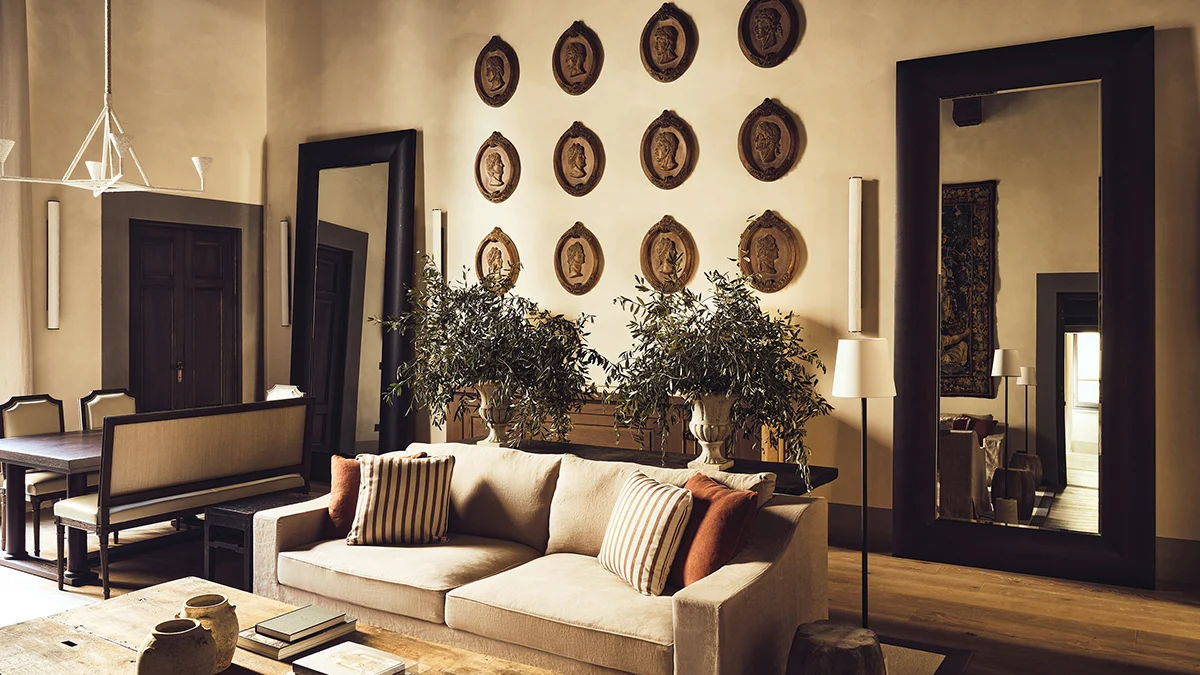
The aesthetic vision, brought to life by the renowned French design firm Gilles & Boissier, strikes a delicate balance between historical reverence and contemporary comfort. Original architectural elements, such as soaring archways and centuries-old frescoes, sit comfortably alongside sleek Modernist design touches.
Designed with absolute privacy in mind, La Réserve Firenze caters equally to high-profile travelers seeking refuge from the public eye and honeymooners embarking on an extended Italian idyll. In an era where traditional luxury hotels often feature bustling lobbies and impersonal service, this boutique residential concept offers a rare commodity: the ability to experience Florence not as a tourist, but as a privileged local.
Chronology: From Medici History to Modern Parisian Vision
To understand the evolution of La Réserve Firenze, one must look at the timeline of both the building itself and the modern visionaries who breathed new life into its historic stones.

- The 15th Century: The palazzo is constructed during the height of the Florentine Renaissance, serving as a noble residence reflecting the architectural grandeur and artistic fervor of the era.
- The Intervening Decades: Over the centuries, the building undergoes various iterations. In its more recent history, the sprawling structure is carved up into a utilitarian warren of studios catering to international art and architecture students studying in Florence.
- 2019: Grégory Marciano and his wife, Olivia, make the permanent move from Paris to Florence, immersing themselves in the rhythm of local life and identifying a gap in the luxury hospitality market for hyper-private, residential-style accommodations.
- The Transformation Era: Collaborating with French interior design powerhouse Gilles & Boissier, the Marcianos embark on a sensitive restoration project. The goal is to strip away decades of makeshift partitioning, restore original frescoes and architectural details, and install state-of-the-art modern amenities without compromising the building’s historical integrity.
- Fall 2024: La Réserve Firenze officially opens its doors, introducing its six serviced apartments to the market alongside an exclusive offering: access to the couple’s private villa—formerly owned by a member of the legendary Gucci family—complete with a private tennis court.
Supporting Data & Market Analysis: The Shift Toward High-Touch Residential Travel
The launch of La Réserve Firenze is not merely an isolated real estate venture; it is a direct response to a fundamental shift in luxury travel consumer behavior. High-net-worth travelers are increasingly moving away from traditional hotel models in favor of spaces that offer the autonomy of a private residence coupled with five-star hotel services.
According to Andrea Grisdale, CEO and founder of the premier Italy travel specialist IC Bellagio, this trend is defining modern luxury tourism.
"We’ve got those people that [say], ‘I want my apartment… but I want somebody who’s going to bring me a Coca-Cola at two o’clock in the morning,’" Grisdale explains.
This convergence of independence and hyper-personalized service commands premium pricing. Rates at La Réserve Firenze start at approximately $1,500 per night, positioning it firmly in the ultra-luxury tier. Yet, for affluent travelers, the value lies not just in the square footage or the bespoke furnishings, but in the psychological luxury of seclusion and authenticity.
Furthermore, industry experts note that the timing of such properties opening in residential neighborhoods helps decentralize tourism pressures. By drawing high-spending travelers into districts like the Oltrarno—where artisans, local bakeries, and neighborhood workshops still thrive—developments like La Réserve contribute positively to sustainable tourism models, distributing economic benefits beyond the congested tourist traps surrounding the Duomo and Ponte Vecchio.
Official Responses and Expert Insights: Living "La Dolce Vita" Like a Florentine
The core philosophy behind La Réserve Firenze is rooted in immersion rather than observation. As Grégory Marciano emphasizes, the property occupies a very specific urban fabric:

"This is a street where Florentine people live… If you really want to experience living like a Florentine family right now, this is very similar."
This sentiment is echoed by travel curators who work daily with discerning global clientele. Grisdale points out that the true magic of experiencing Italy like a local often manifests in the off-season, when the frenetic energy of summer peak tourism dissipates, allowing for genuine human connections.
"Dine at one of the city’s hot spots in the summer," Grisdale notes, ‘and there is no way that the owner is going to sit down with you at the end of the meal and have a limoncello.’
Beyond the walls of the palazzo, the Marcianos extend this philosophy by granting guests access to their private villa—historically tied to the Gucci family—offering rare amenities like a private tennis court that are virtually impossible to find within the dense historic center of Florence.
To help guests navigate the city away from the tourist path, Grisdale and her team at IC Bellagio curated an exclusive insider’s hit list of authentic Florentine establishments:
- The Classic Restaurant (Cibrèo): Eschewing standard tourist-menu pasta, this legendary establishment elevates humble peasant dishes—such as stuffed pigeon—into world-class fine dining.
- The Coffee Shop (Dinicaffè): Situated in Florence’s historic city center, this is the area’s sole coffee roaster, where visitors can tour the roasting process and acquire single-source beans.
- The Aperitivo Bar (Giacosa 1815): Famed historically as the birthplace of the Negroni, its welcoming atmosphere frequently draws patrons back after dinner for a traditional digestivo.
- The Leather Shop (Il Bisonte): Tapping into Florence’s rich leather-crafting heritage, this boutique offers goods meticulously handcrafted by artisans working within a strict 19-mile radius of the shop.
Implications: The Future of Urban Luxury and Neighborhood Preservation
The arrival of properties like La Réserve Firenze signals a broader evolution in how historic European cities manage high-end tourism. As travelers seek deeper authenticity, the definition of luxury hospitality is pivoting away from massive, brand-name hotels toward boutique, community-integrated properties.

1. Urban Revitalization vs. Gentrification
By taking a neglected 15th-century structure—previously broken down into rudimentary student housing—and converting it into high-end residential suites, the developers have preserved a piece of architectural heritage that might otherwise have fallen into deeper disrepair or been converted into commercial souvenir shops. However, this model also raises important questions about urban gentrification and the cost of real estate in historic centers. Balancing upscale residential tourism with the preservation of local housing stock remains a critical challenge for Florentine municipal authorities.
2. The Decentralization of Tourism
By anchoring guests in the Oltrarno rather than the immediate vicinity of the Santa Maria del Fiore cathedral, La Réserve Firenze actively encourages the dispersion of tourist foot traffic. When affluent travelers patronize neighborhood coffee roasters, artisanal leather shops, and family-run restaurants across the Arno River, wealth is distributed directly into local, non-corporate hands.
3. The Shift in Ultra-Luxury Expectations
The success of the Marcianos’ venture proves that modern ultra-luxury travelers place a premium on anonymity and domestic comfort. The traditional grand hotel model—with its bustling lobbies, rigid dining schedules, and standardized room layouts—is increasingly yielding to hybrid models that offer hotel-grade infrastructure wrapped in the intimacy of a private home.
As cities like Florence continue to navigate the delicate equilibrium between preserving their past and accommodating the future, La Réserve Firenze offers a compelling blueprint: honor the history, respect the neighborhood, and deliver an uncompromising standard of quiet, personal luxury.
 Evan Lee Salim
 Basiran
 Sagoh
