

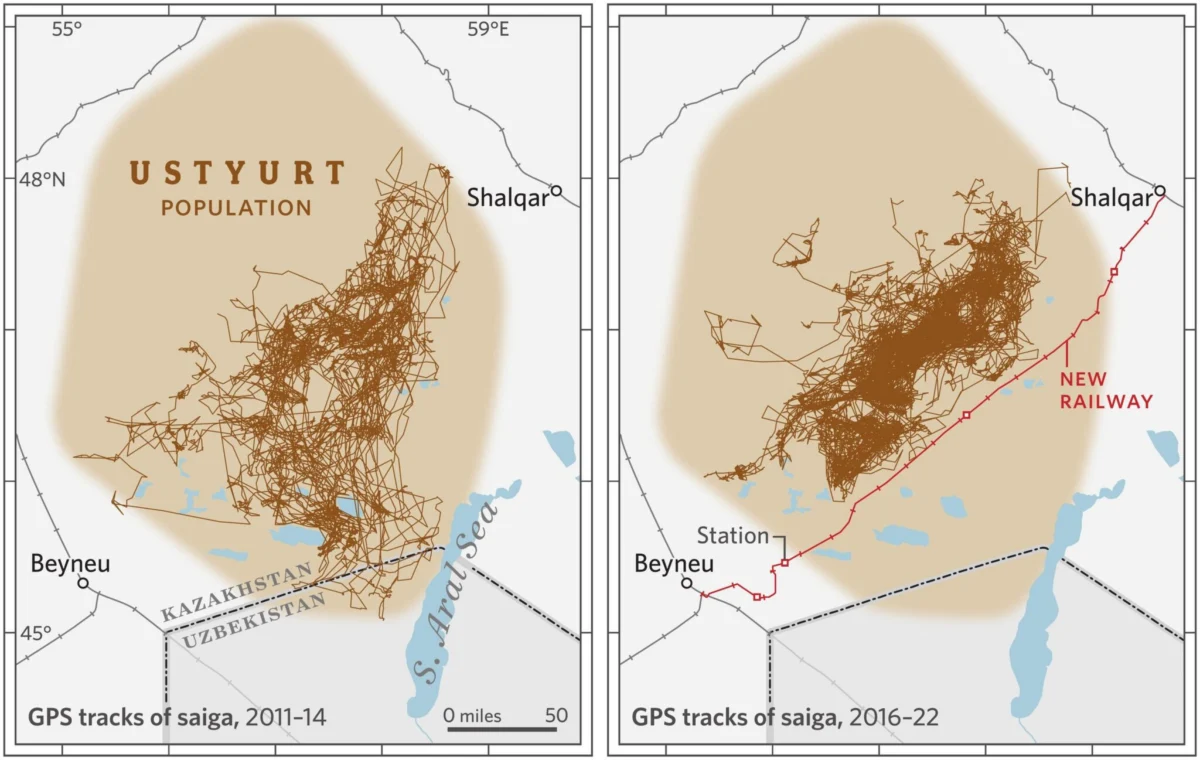
The Eurasian steppe, a vast, windswept expanse stretching from the Caucasus to Mongolia, has long been defined by the rhythm of movement. Here, in the remote reaches of western Kazakhstan, the landscape is not merely a geographic feature; it is a repository of history, where the memories of ancient human nomadic cultures and the enduring migrations of the saiga antelope converge. However, this primordial tableau is currently facing an existential crisis. As modern infrastructure—railways, fences, and roads—slices through the heart of the steppe, the "Saiga Silk Road" is being erased, threatening to sever the migratory traditions of an animal that survived the Pleistocene.
The Ghost of the Steppe: An Ancient Survivor
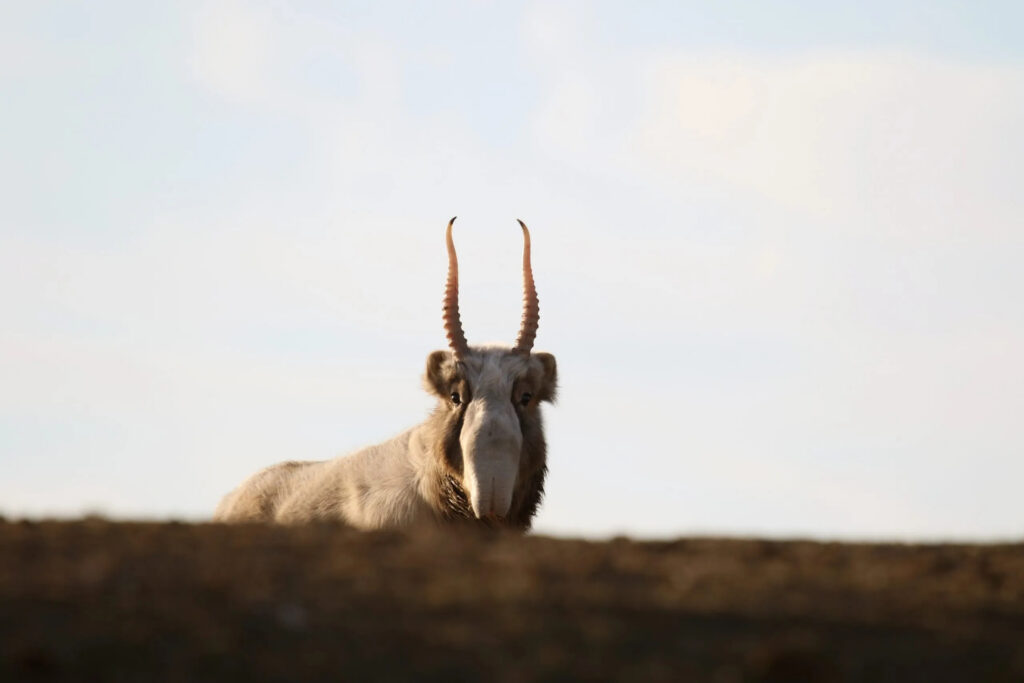
The saiga (Saiga tatarica) is a creature of evolutionary resilience. Sharing the world with woolly mammoths and saber-toothed cats, the saiga is one of the few megafauna survivors of the last ice age. Characterized by their iconic, bulbous noses—an evolutionary marvel that filters dust and warms frigid air—these antelope are the quintessential nomadic engineers of the Central Asian grasslands.
For millennia, human caravans navigating the unforgiving terrain of the steppe relied on the saiga as a guide. If the saigas were moving, the water and grazing were plentiful; if they stalled, so did the caravans. This symbiotic, unspoken relationship helped define the migration corridors that eventually evolved into the complex web of trade routes known as the Great Silk Road.
Chronology of a Disrupted Migration
The modern plight of the saiga is a story of twentieth-century industrialization colliding with ancient biological imperatives.
- Pre-Soviet Era: Nomadic human populations and saiga herds lived in a state of synchronized mobility. The Kazakh people, whose name is derived from the Turkic qaz ("wanderer"), followed seasonal patterns, migrating to higher altitudes in summer and retreating to sheltered valleys in winter.
- The Soviet Era (1920s–1990s): The Soviet Union implemented mandatory sedentarization, forcing nomadic human tribes into fixed agricultural plots. This policy not only fractured a cultural identity but also failed ecologically, as the steppe soil was largely unsuitable for intensive farming.
- The Post-Independence Fragmentation (2000s–Present): As Kazakhstan modernized, the landscape was rapidly partitioned. New railway lines, border fencing, and paved roads created "hard barriers" in the migration path.
- 2014: A pivotal moment in saiga conservation, when a major new railway line in western Kazakhstan acted as a physical wall, completely cutting off a traditional migratory path that led into Uzbekistan. GPS data shows that herds, once free to traverse these plains, were left spinning in despondency on the northern side of the tracks, unable to reach the vital southern grazing lands.
Supporting Data: The Cost of Isolation
The Association for the Conservation of Biodiversity of Kazakhstan (ACBK) has been at the forefront of tracking these changes. Using GPS-collared specimens, researchers have documented a stark decline in the spatial range of the herds.
The data reveals that migration is not merely instinct; it is a learned cultural behavior. When a herd is blocked from a traditional corridor for several generations, the "spatial knowledge"—the communal memory of where food and water can be found—begins to evaporate. Science writer Ben Goldfarb has likened this loss to the "erasure of a language."
During the rutting season—the period of intense competition and mating—the energy expenditure of the males is already at a biological limit. The added stress of navigating human-made obstructions, coupled with the loss of prime grazing grounds, has created a demographic bottleneck. Without the ability to move freely across the steppe, the saigas are more susceptible to disease, extreme weather events, and localized population collapses.
Official Responses and Conservation Strategy
The ACBK, in partnership with the Kazakh government, has launched an ambitious effort to "rewild" the infrastructure of the steppe. The strategy is focused on restoring connectivity through targeted engineering:
- Saiga-Friendly Crossings: Engineers are constructing sloping dirt ramps that rise to the level of train tracks, creating an optical illusion of a natural, unbroken path. This allows the skittish antelope to cross railway lines without the paralyzing fear of a sudden vertical barrier.
- Strategic Fencing: In collaboration with the Uzbek government, barbed-wire borders—which were previously fatal to migrating herds—are being replaced with X-shaped barricades. These allow the saigas to slip through while still effectively preventing unauthorized vehicle traffic.
- Sanctuary Designation: Using historical GPS tracking data, the government has established new wildlife sanctuaries that align with the actual, verified paths of the herds, rather than relying on arbitrary administrative boundaries.
The Philosophical Implications: A World Beyond Margins
The effort to save the saiga is more than a biological rescue mission; it is a question of our relationship with the wild. Filmmaker Werner Herzog once remarked that the "departure from the nomadic life" is the root of the doom facing modern civilization. By forcing the saiga into stationary plots, we are effectively repeating the failed experiment of human sedentarization.
As we stand on the edge of the Ural River—the physical boundary between Asia and Europe—the landscape serves as a reminder that the "in-between" spaces are not empty. For the nomadic traveler, the vast, uninhabited stretches of the steppe were never "nothing"; they were the center of everything.
The struggle of the saiga is a mirror to our own history. We spent 288,000 of our 300,000 years on this planet in motion, following the cycles of the earth. In observing the saiga’s frantic, desperate sprints across the frozen crust of the steppe, we are seeing the last remnants of a world that existed before the fences.
If we allow the saiga’s migratory language to be erased, we lose a vital link to our own nomadic heritage. Conservationists like Albert and the team at ACBK are not just saving an antelope; they are attempting to keep the pulse of the steppe beating. The goal is to ensure that the road ahead, for both human and nonhuman travelers, remains open—a reminder that in the vast, perilous expanse of the world, there is life beyond humanity’s margins, and it is a life that demands the freedom to move.
As the winter storms roll across the Eurasian plains, burying the tracks of the past in fresh, white powder, the saiga continue their march. They remain, as the locals say, "freedom-loving animals"—a testament to the fact that no matter how many walls we build, the spirit of the nomad remains etched into the soil of the steppe.
 Pevita Pearce
  Nana Muazin
  Azzam Bilal Chamdy