

For decades, the “Golden Route”—the well-trodden path connecting Tokyo, Kyoto, and Osaka—has defined the international perception of Japan. Yet, for the discerning traveler, the true soul of the nation often lies in the shadows of these metropolises, tucked away in the islands and valleys of the Seto Inland Sea. A recent expedition through the Kagawa, Tokushima, and Okayama prefectures revealed a landscape where avant-garde art, Edo-period history, and rugged, ancient wilderness converge.
The Fabric of History: Kurashiki and Kojima
Main Facts and Cultural Context
The journey commenced in Kurashiki, a city that functions as a living museum of the Edo period. Arriving via Okayama Airport, the 45-minute transit leads directly into the Bikan Historical Quarter. Here, the aesthetic is defined by kura (white-walled storehouses) and weeping willows that drape over the canal waters.
The Kurashiki Kokusai Hotel serves as an ideal anchor for this experience. Its lobby is dominated by a monumental, two-story woodblock-inspired artwork commissioned in 1963 by Shikō Munakata, a legendary folk artist. This piece sets the tone for a region that prides itself on the marriage of traditional craftsmanship and modernist expression.
Chronology of the Craft
A short drive south from the canals leads to Kojima, the epicenter of Japanese denim. At the Betty Smith Jeans Museum & Village, visitors are invited to step off the sidelines and into the workshop. The process of customizing a pair of jeans—selecting rivets, buttons, and patches—is a stark reminder of the labor-intensive nature of high-end textile production. Operating manual press tools requires significant physical exertion, a fact that humbles many who mistake the "maker movement" for a passive tourist activity.
The local culinary scene follows this theme of authenticity. At Takuzen, located near the denim district, the sawara (Spanish mackerel) meal—served raw, grilled, and as tempura—demonstrates the regional philosophy of "local-first" gastronomy. By relying on the immediate catch of the Seto Inland Sea, the restaurant bridges the gap between historical fishing traditions and contemporary culinary refinement.
The Art of the Island: Naoshima and Takamatsu
Supporting Data: A Landscape of Contemporary Vision
The transition from Kurashiki to the art-focused island of Naoshima involves a 45-minute drive to Uno Port, followed by a ferry crossing that feels distinctly cinematic. Upon arrival at Miyanoura Port, the presence of Yayoi Kusama’s iconic spotted pumpkins signals an entry into a world where the environment itself is the canvas.
Naoshima is a masterclass in architectural integration. The island’s infrastructure, largely shaped by Tadao Ando’s concrete minimalism, encourages exploration by electric bicycle. The newly opened Naoshima New Museum of Art adds a vital layer to this experience, shifting the focus toward broader Asian contemporary art. For those visiting the Chichu Art Museum, advance planning is non-negotiable; the permanent installations—featuring Monet, Turrell, and De Maria—are designed specifically for the subterranean light conditions of the site, making them immovable and site-specific.
Implications: Reflections on Space and Identity
Takamatsu, a short ferry ride from Naoshima, offers a more meditative pace. The Ritsurin Garden, often overlooked in favor of Kyoto’s sites, is an expansive 400-year-old landscape. Its design is intentionally disorienting; every bridge and pond is positioned to force the visitor to reconsider their perspective.
This sense of introspection continues at the Isamu Noguchi Garden Museum. Noguchi, a Japanese American sculptor, left his studio exactly as he worked in it. Seeing his unfinished stone works alongside finished masterpieces highlights the dualities of his life. His career was a physical manifestation of moving between two cultures, and the preservation of his studio serves as a poignant reminder that art is often a process of reconciling conflicting identities.
For the traveler, this region offers a rare opportunity for luxury that accommodates diversity. At Kyomisanso Hanajukai, the inclusion of private hot spring baths in rooms provides a welcoming environment for travelers with tattoos—a demographic often excluded from traditional public onsens. The kaiseki dinner service here, a multi-course ritual of seasonal precision, confirms that the Setouchi region treats hospitality as a high art form.
The Wild Frontier: Iya Valley and Naruto
The Shift in Geography
The three-hour transit from Takamatsu to the Iya Valley marks the most dramatic change in the itinerary. As the coastal views and urban centers fade, the topography becomes vertical and verdant. The Iya Valley represents the “untamed” Japan, characterized by steep mountains and the rushing Iya River.
Staying at Tougenkyo-Iya—a cluster of centuries-old, restored thatched-roof farmhouses—is an exercise in historical immersion. Dinner is served around an irori (traditional hearth), providing a sensory connection to a rural past that is rapidly vanishing.
Official Perspectives on Sustainability
The regional tourism authorities have emphasized the importance of these sites, such as the Iya Kazurabashi vine bridge, as "cultural assets." These structures are not merely bridges; they are historical technologies of survival. Crossing the narrow wooden slats above the river, one gains a visceral understanding of the landscape’s historical isolation.
Nearby, the Naruto Whirlpools offer a stark contrast to the quiet of the valley. These tidal currents, viewed from the Uzu no Michi walkway, are a volatile reminder of nature’s power. Travelers should take note: these phenomena are strictly dictated by lunar tides. A failure to consult the tide tables will result in an underwhelming view of still water, whereas timing the visit within 90 minutes of high or low tide reveals the true, violent beauty of the Naruto Strait.
Awaji Island and the Return to the Metropole
Final Synthesis: The Modern-Traditional Synthesis
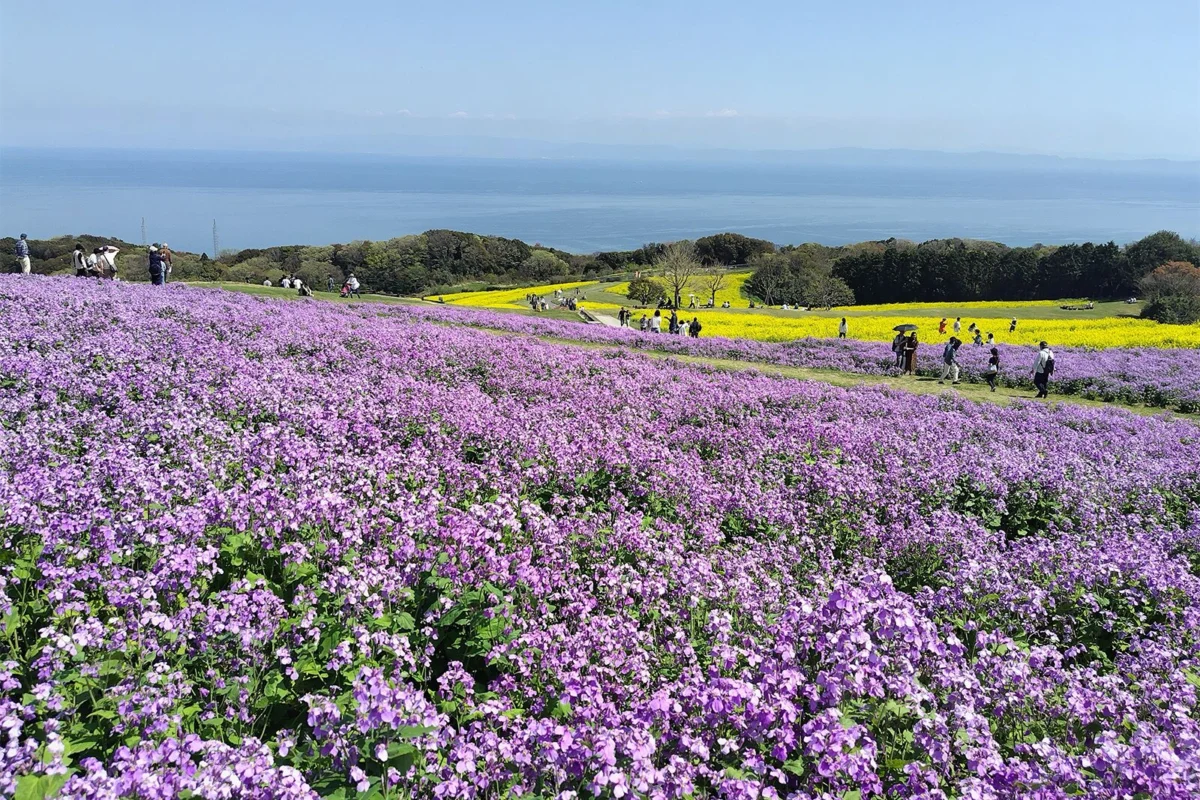
The journey concludes on Awaji Island, a vital link between the Shikoku region and the Osaka prefecture. Awaji Hanasajiki, a vast flower park, serves as an outdoor gallery, while Zenbo Seinei offers a contemporary take on spiritual wellness. The facility, a minimalist retreat designed for meditation and matcha ceremonies, allows for a final moment of silence before the return to urban life.
The re-entry into Osaka is startling. After days spent navigating mountain mists, island ferry schedules, and the quiet rhythm of the Iya Valley, the neon-lit, 24-hour chaos of Osaka’s streets acts as a sensory shock.
Implications for Future Travel
The contrast between the silence of the Iya hearth and the hum of the Osaka neon sign is the definitive experience of the Setouchi region. It highlights the essential duality of Japan: a country that protects its ancient, remote soul with as much vigor as it pursues its high-tech, high-speed future. For those willing to venture beyond the Golden Route, the rewards are not just found in the sights, but in the realization that Japan is not a monolith, but a collection of distinct, living, and breathing environments waiting to be rediscovered.
Quick Reference Guide: Essential Stops
| Location | Primary Experience |
|---|---|
| Naoshima New Museum | Asian contemporary art curation |
| Chichu Art Museum | Site-specific light installations |
| Ritsurin Garden | 400-year-old landscape design |
| Isamu Noguchi Museum | Sculptural studio preservation |
| Nakano Udon School | Traditional Sanuki udon technique |
| Iya Kazurabashi | Historic vine bridge crossing |
| Naruto Whirlpools | Tidal phenomenon observation |
Note: When planning a visit to the Naruto Whirlpools, verify the tide charts via the official Naruto tourism portal to ensure optimal viewing conditions.
 Sagoh
Sagoh  Reynand Wu
  Lina Hope