

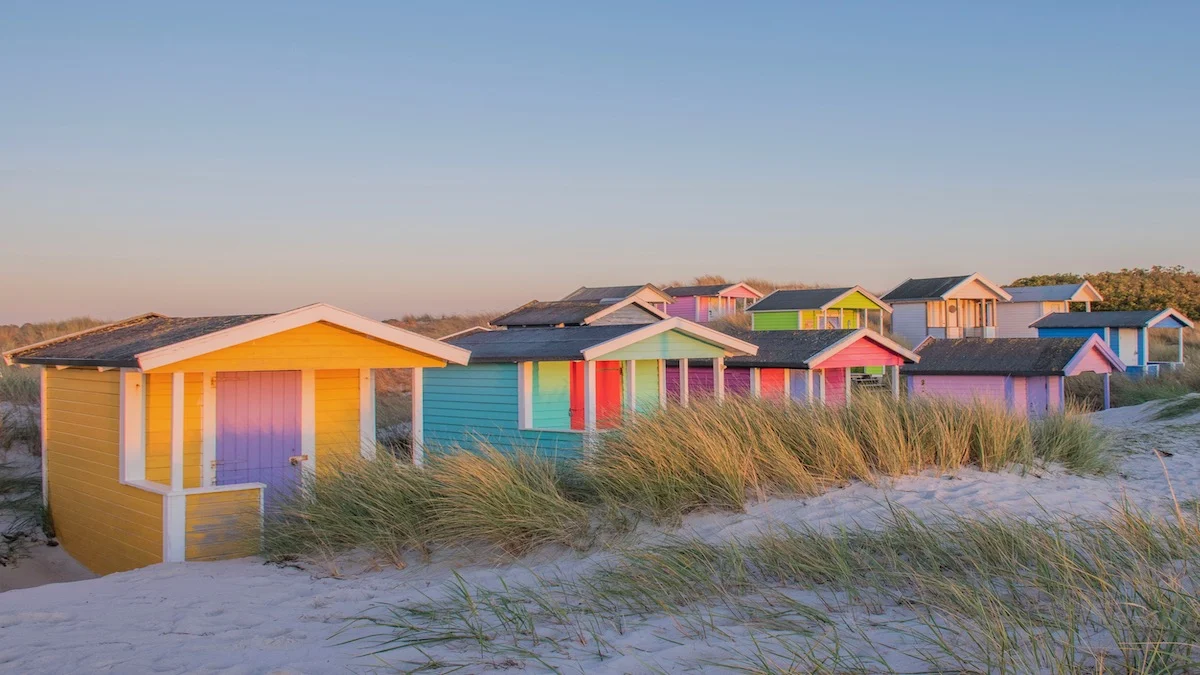
STOCKHOLM — More than a century ago, Danish and Swedish royalty sought refuge from the pressures of court life on the windswept Bjäre Peninsula, finding solace in the unpretentious coastline and rolling green hills of southern Sweden. Today, a new generation of high-net-worth travelers is rediscovering that same understated sanctuary. But rather than seeking the gilded ballrooms of Europe’s historic capitals or the conspicuous consumption of the French Riviera, today’s elite are gravitating toward a radically different definition of high-end hospitality: one rooted in absolute discretion, hyper-seasonal gastronomy, and an uncompromising reverence for the natural world.
This tectonic shift in Nordic luxury is anchored by a wave of remarkable new openings, spearheaded by some of the culinary world’s most celebrated minds. From Michelin-starred farmsteads to meticulously restored century-old guesthouses, Sweden’s coastal and rural retreats are redefining what it means to travel in the lap of luxury—proving that true opulence is no longer about how loud you can live, but how quietly you can exist.
Main Facts: The New Landscape of Understated Elegance
At the vanguard of this movement is Furuhem, an unassuming guesthouse sitting quietly on the Bjäre Peninsula. Sporting a modest white facade, kale-green shutters, and a restored red-tile roof, Furuhem looks every bit the traditional Swedish summer home. Inside, however, it reveals a masterclass in fine craftsmanship: bespoke furnishings, a lovingly chiseled new staircase, and more than 200 restored vintage lamps that bring a century-old property back to vibrant life.
Described by its creators as an "extraordinary inn with a perfectly ordinary restaurant, and bakery," Furuhem opened its doors to a staggering three-month waitlist. The property is the personal home and project of chef Magnus Nilsson—the former two-Michelin-star visionary behind Fäviken and one of the original culinary stars featured on Netflix’s Chef’s Table. Following Fäviken’s closure in 2019, Nilsson has pivoted away from remote, experimental maximalism toward a philosophy of quiet luxury, co-managing Furuhem alongside chef Frida Nilsson and Noma alumnus Daniella Rebelo.
Furuhem is far from an isolated phenomenon. Across southern and western Sweden, a constellation of destination-worthy properties is capturing the attention of affluent travelers who are increasingly choosing to bypass the dangerously overheating Mediterranean shores in favor of cooler, more sustainable domestic escapes.

Chronology: From the New Nordic Manifesto to the Rise of Quiet Luxury
To understand Sweden’s current culinary and hospitality renaissance, one must look back to the height of the New Nordic Movement.
- The Early 2000s: Spearheaded by visionaries like René Redzepi of Noma and Magnus Nilsson of Fäviken, the New Nordic Food Manifesto electrified the global gastronomic community. The movement championed pure, local, and wild ingredients, capturing international attention and drawing wealthy food pilgrims to the deep evergreen forests of Jämtland.
- The Fäviken Era: For years, adventurous gastronomes paid handsomely—roughly $350 per person for a 32-course degustation—to dine on dried pig’s blood, bone marrow scooped out and served with diced cow’s heart, and arctic char caught moments earlier by Nilsson himself in nearby Lake Kallsjön.
- 2019: Citing burnout and a desire to evolve, Magnus Nilsson shocked the culinary world by permanently closing Fäviken. The closure marked the end of an era for aggressive, high-concept destination dining.
- 2023–Present: A post-pandemic desire for grounding, paired with climate concerns regarding Mediterranean summer heatwaves, sparked a massive localized travel boom. Chefs and hoteliers began reclaiming historic rural properties, giving rise to low-key, high-impact sanctuaries like Vyn Restaurant and Hotel, Åstad Vingård, and ultimately, Furuhem.
Supporting Data and Regional Highlights
The modern Swedish luxury circuit is defined by a distinct lack of posturing. It is a world where Chief Executive Officers of Fortune 500 companies happily mow their own lawns, walk their dogs, and walk into world-class restaurants wearing high-end sneakers and casual resort wear.
Åstad Vingård and Restaurant Äng
Located an hour’s drive from Furuhem in the Halland province, Åstad Vingård is a third-generation former dairy farm turned small-scale winery and spa. Run by siblings Linda, Daniel, and Mattias Carlsson, the property attracts a sophisticated mix of bankers, affluent Danish families, and design-conscious travelers seeking weekend refuge.
Guests can wander past grazing cows before sitting down inside a stunning designer glasshouse for chef Filip Gemzell and his wife Ann-Catrin’s 19-course hyper-seasonal tasting menu at Restaurant Äng. The meal is paired with what is arguably Sweden’s most impressive wine collection, featuring rare vintages such as Krug Clos du Mesnil Blanc de Blancs Brut (deg. 2020), Roederer Cristal Vinothèque (deg. 2020), and Montrachet Grand Cru. Furthermore, the Carlsson family’s acquisition and ongoing million-dollar renovation of the historic 1822 bathhouse Varbergs Kusthotell—situated near Apelviken, Sweden’s premier surf beach—underscores the heavy financial investment pouring into the region.
Vyn Restaurant and Hotel
Further down in Skåne county, overlooking the picturesque Österlen coast, sits Vyn. Opened in 2023, this destination marks the triumphant return of celebrated chef Daniel Berlin. Securing a reservation at Vyn is notoriously difficult—often compared to scoring tickets to a sold-out Taylor Swift or Harry Styles concert.

For those fortunate enough to secure a booking, the reward is an exquisite 18-course dinner ($410) that explores the fields, forests, and seas of Skåne county. Paired with a prestige wine selection ($460) and accommodated in one of the property’s premier suites (reaching up to $848 per night in high season), guests are treated not only to avant-garde gastronomy but also to Berlin’s legendary, highly anticipated breakfast spread.
Official Responses and Expert Perspectives
Industry insiders note that the cultural DNA of the Nordic region aligns seamlessly with the global movement toward "quiet luxury."
"In Sweden, luxury isn’t loud—it’s intentional," says Janel Carnero, a luxury travel adviser with Embark Travel. "It’s not about gold leaf or marble lobbies. Luxury here is found in the extreme purity of the experience. It’s foraging for your own dinner ingredients with a master chef or taking a private ice-bath ritual. It’s an understated elegance that feels incredibly grounded."
Daniel Carlsson of Åstad Vingård echoes this sentiment, pointing out the delightful democratization of wealth visible on his property grounds.
"The idea of quiet luxury has been shaping things globally for a few years now, and in many ways it shares DNA with the Nordic cultural approach, which tends to be more understated and somewhat wary of overt displays of status," Carlsson notes. "The other day, I walked past the car park and saw a rather worn old car parked right next to a Bentley. That is probably a fairly accurate picture of who we are at the moment, and I very much like that."

Mathias Dahlgren, a Michelin-starred chef widely regarded as the "Godfather" of modern Swedish cuisine—who recently opened Ateljé Vita duken – Tornhuset in his hometown of Umeå—believes that the Swedish connection to nature is deeply therapeutic.
"We Swedes are born as nature romantics; we have an idealized love for nature. I believe we’ve always used nature as a way to heal," Dahlgren explains. "It has been our escape from industrialization, urbanization, and modern stress. Picking wildflowers by the roadside, cooking over an open fire, swimming naked in a lake—that is the ultimate luxury for us."
Implications: A Sustainable Future for Nordic Tourism
The quiet renaissance occurring across the Swedish countryside and coastal shores represents far more than a temporary travel trend. It signals a fundamental recalibration of what high-net-worth consumers value when they step away from their professional lives.
While the 1970s saw affluent Scandinavians abandon their home shores in droves to chase the glitz and glamour of the Mediterranean, today’s travelers are realizing that true peace cannot be found in crowded beach clubs or amid the roar of superyacht engines. Instead, the future of Nordic hospitality lies in the preservation of heritage, ecological mindfulness, and deeply personal, intimate experiences.
Whether it is waking up to the smell of freshly baked cinnamon rolls, marveling at the rolling hills of the Bjäre Peninsula, or savoring a traditional, jiggly-wiggly slice of äggakaka (Skåne’s signature savory egg cake) in lieu of champagne sparklers and imported salads, Sweden’s new wave of luxury proves that the most valuable commodity in the modern world is simply space to breathe.
 Evan Lee Salim
 Nana
 Basiran
