

By Health N Beauty Stuff
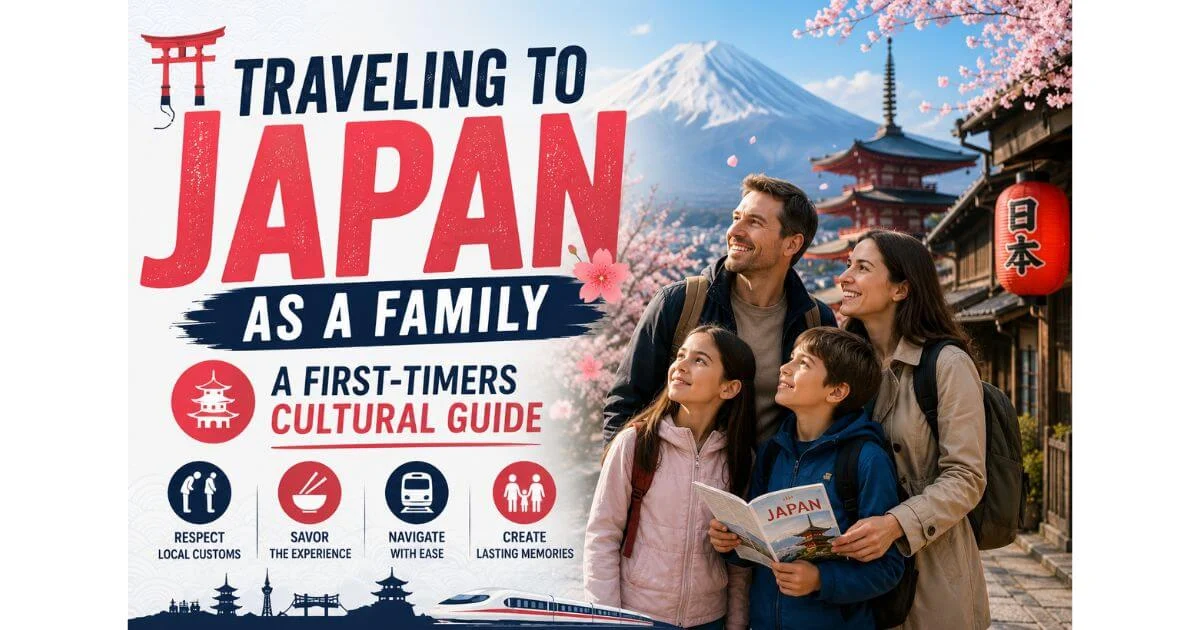
For many traveling parents, the prospect of navigating Japan with children feels like an exercise in high-stakes logistics. The vision of a sprawling metropolis housing nine million residents, a complex linguistic landscape, and a set of rigorous, often misunderstood social norms can be daunting. Yet, for those who take the plunge, the reality is frequently the inverse of their anxieties. Within twenty-four hours of arrival, most families find themselves asking a singular, pervasive question: Why does every other country not operate with this level of efficiency?
From the clockwork precision of the train system to the pristine cleanliness of the streets and the ubiquitous convenience stores offering everything from hot corn soup to nutritious meals, Japan stands as a gold standard for travel. It is a nation that manages to be both profoundly sophisticated and deeply family-oriented.
Main Facts: The Reality of Modern Japanese Travel
Contrary to the perception that Japan is an insular or difficult destination for international families, it is objectively one of the most accessible nations for tourists traveling with children. The perceived barriers—language, etiquette, and navigation—are largely cultural nuances that are easily mastered.
The Myth of the "Difficult" Destination
The primary hurdle for many families is the fear of the unknown. However, Japanese infrastructure is inherently designed to support family mobility. Trains are equipped with priority seating and dedicated space for strollers, while high chairs and child-friendly amenities are almost universally available, often appearing before they are even requested.
Infrastructure and Ease of Access
The transit system is the backbone of the Japanese travel experience. While it may appear as a tangled web of lines on a map, it is remarkably intuitive. The introduction of IC cards—such as Suica or Pasmo—has revolutionized mobility; travelers simply tap in and tap out, eliminating the need to fumble for tickets. Furthermore, major stations are equipped with elevator access, and the widespread use of English signage in urban centers ensures that non-Japanese speakers can navigate with confidence.
Chronology: A Roadmap for the First-Timer
Successful family travel in Japan is predicated on a logical, paced approach to the journey.
Days 1–2: The Gentle Acclimatization
Jet lag is the great equalizer. The most common error families make is attempting to schedule high-energy excursions immediately upon arrival. Experts suggest a "gentle start" strategy. Spend the first forty-eight hours exploring local parks or quiet neighborhoods. This allows children to adjust to the time zone without the pressure of strict itineraries, effectively preventing the meltdowns that often arise from over-scheduling.
Days 3–7: Cultural Integration
Once the family is acclimated, the immersion begins. This phase is ideal for visiting temples and shrines. By teaching children the basic rituals—bowing at the gate, performing the cleansing rites at the water pavilion, and participating in the quiet contemplation of the main hall—parents turn a sightseeing trip into a meaningful cultural exchange.
The Departure Phase
As the trip concludes, the transition back to daily life often feels abrupt. Many families find that the final day is best spent in a low-stress environment, perhaps revisiting a favorite convenience store or park, before navigating the efficient, stress-free transit lines back to the airport.
Supporting Data: The Logistics of Daily Life
To understand why Japan is uniquely suited for families, one must look at the specific support systems embedded within the society.
Nutritional Accessibility
The stereotype that Japanese cuisine is limited to raw fish is a significant deterrent for parents of picky eaters. In reality, the culinary landscape is exceptionally diverse. Family restaurants (famiresu), conveyor-belt sushi joints, and ramen shops offer a wide variety of palatable options. Perhaps most importantly, the conbini (convenience store) serves as a vital resource. With high-quality offerings like onigiri (rice balls), egg sandwiches, milk bread, and fresh fruit, families can secure nutritious, affordable meals at any hour of the day.
Economic Considerations
Contrary to popular belief, Japan is not universally expensive. While major hubs like Tokyo carry the costs associated with any world-class capital, the overall financial burden is often comparable to traveling in Western Europe. Accommodations and long-distance rail travel represent the primary expenditures, but the accessibility of affordable food and the fact that children under six ride the trains for free provide significant relief to the family budget.
Official Responses: Cultural Etiquette and Social Harmony
The Japanese approach to social etiquette is rooted in mutual respect, a concept that is surprisingly easy for children to adopt.
The "Quiet" Philosophy
One of the most praised aspects of Japanese society is the decorum maintained in public spaces. On trains, silence is the standard. While this might sound restrictive, children generally mirror the behavior of those around them. When the environment is consistently calm, children tend to become more observant and quiet, fostering a deeper sense of engagement with their surroundings.
The Significance of Names
The cultural emphasis on the collective is reflected even in the naming structure, where the family name precedes the individual name. While the Japanese are incredibly accommodating toward Western naming conventions, understanding the importance of the family unit is a cornerstone of cultural intelligence. Engaging children in this concept—perhaps by using a Japanese Name Generator to explore the meaning behind their own names in kanji—can foster a sense of personal connection to the country before the plane even departs.
Implications: The Long-Term Value of the Experience
Taking a family to Japan provides benefits that extend far beyond the duration of the vacation.
Educational Enrichment
Japan offers a unique juxtaposition of tradition and hyper-modernity. Watching a child attempt to bow, navigate a high-speed Shinkansen, or decipher a picture menu in a traditional restaurant provides a developmental milestone that few other travel experiences can replicate. These moments foster resilience, curiosity, and a global perspective.
The "Ease" Factor
The most profound implication of traveling to Japan is the realization that the world can be navigated with grace. By experiencing a society where "public helpfulness" is the default setting, children learn that there is value in order and consideration for others. When one returns home, the ease of the Japanese experience often highlights the need for similar systems elsewhere, leaving travelers with a lasting appreciation for the harmony of Japanese society.
Frequently Asked Questions (FAQ)
Is Japan truly appropriate for all age groups?
Yes. While school-age children may derive more educational value from the history and geography, younger children are welcomed with open arms. The key is simply to adjust expectations regarding daily pace and ensure that stroller-friendly routes are prioritized.
Do I need a translator or language training?
Extensive Japanese language skills are not required. In major tourist areas, English is prevalent. Learning a few polite phrases—such as arigato (thank you) and sumimasen (excuse me)—is viewed as a sign of respect and goes a long way in fostering positive interactions with locals.
What is the most critical item to pack?
Beyond the essentials, pack comfortable, slip-on shoes. Given the frequency with which you will be required to remove your footwear—in homes, temples, and certain restaurants—ease of movement is paramount. Additionally, carrying a small hand towel is a pro-tip, as many public restrooms lack paper towels.
How should I handle the "Cash-Only" dilemma?
While Japan is rapidly modernizing, smaller temple stalls and rural businesses remain cash-reliant. It is advisable to keep a stash of yen on hand at all times, rather than relying solely on credit cards.
Final Advice for First-Timers
The golden rule of traveling in Japan with family is to "do less than you think you should." The Japanese culture is one that rewards depth over breadth. By slowing down, embracing the small rituals, and allowing children to lead the exploration, you ensure that the trip is not just a success, but a transformative family milestone. Japan is not merely a destination; it is a masterclass in how to live with others—a lesson that every family will carry home long after the journey ends.
 Sagoh
Sagoh  Nila Kartika Wati
  Laily UPN