

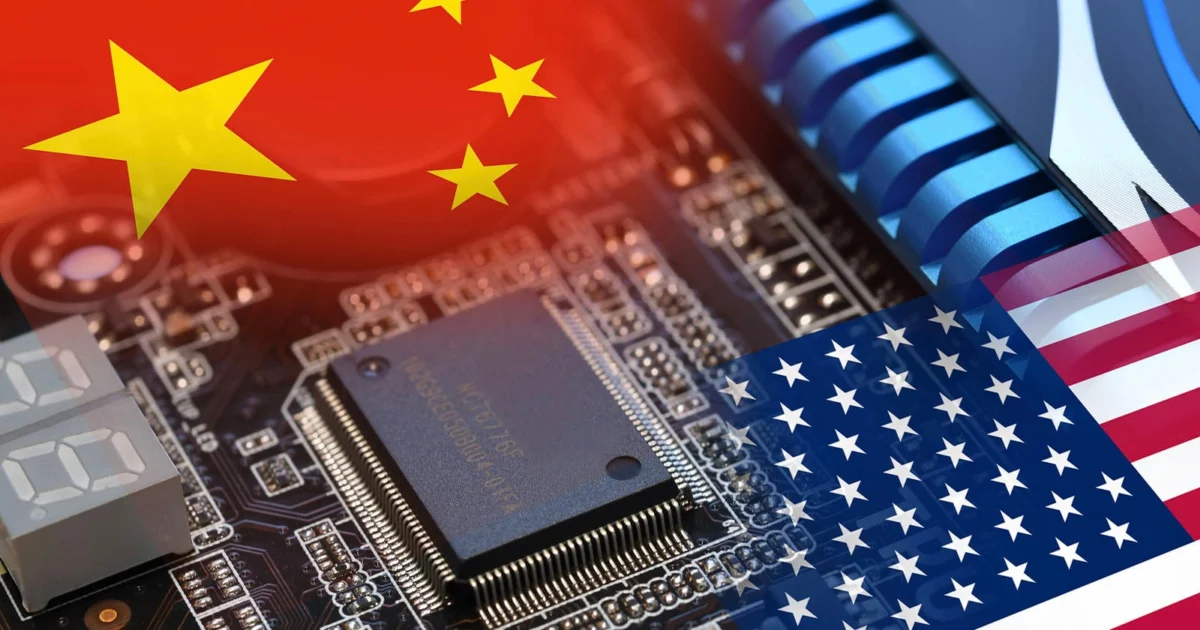
The escalating geopolitical rivalry between the United States and China has found a new, high-stakes battleground: the sophisticated architecture of Large Language Models (LLMs). In a significant escalation of trade tensions, U.S. Treasury Secretary Scott Bessent has issued a stern warning, threatening to impose aggressive sanctions on Chinese artificial intelligence firms accused of systematically misappropriating intellectual property (IP) from American technology giants.
The ultimatum, delivered during a Tuesday appearance on Fox Business, marks a pivotal moment in the Biden-Trump transition era of technology policy. While the administration remains officially committed to the ethos of open-source development, Secretary Bessent drew a firm line in the sand regarding the boundaries of innovation versus outright theft. "This administration supports open-source models, but what we do not support is IP theft," Bessent stated. "If we see, especially, that overseas models are stealing from our great companies, we have the ability to sanction them because of this theft."
The Mechanics of Conflict: Distillation and "Teacher-Student" Models
At the heart of this controversy lies a technical practice known as "model distillation." In the AI ecosystem, distillation occurs when a smaller, more efficient "student" model is trained using the outputs of a larger, more powerful "teacher" model. By ingesting the data generated by a proprietary system like OpenAI’s Claude or GPT-4, smaller companies can achieve high-performance results without the immense capital expenditure required for primary research and development.
Earlier this year, Anthropic, one of the leading AI research laboratories in the United States, formally accused three Chinese firms—Moonshot AI, DeepSeek, and MiniMax—of "illicitly" extracting the capabilities of their flagship model, Claude. According to industry experts, this practice has become widespread, effectively allowing late-movers to leapfrog years of R&D by leveraging the foundational labor of Western tech giants.
The tension is exacerbated by the resilience of Chinese firms in the face of U.S. export controls. Despite rigorous restrictions on the sale of state-of-the-art computer chips, such as NVIDIA’s H100 and Blackwell series, Chinese labs are producing increasingly competitive software. The recent release of Moonshot AI’s Kimi K3 serves as a stark example; the model demonstrates high-level reasoning and linguistic fluency, proving that software-level optimization can, at least partially, compensate for hardware bottlenecks.
A Chronology of Escalation
The friction between Washington and Beijing over AI has been building for the better part of a year, characterized by a series of quiet warnings and public accusations.
- Early 2026: Leading American AI labs, including Anthropic and OpenAI, begin briefing White House officials on the risks of "weight theft" and the unauthorized distillation of their proprietary models.
- Spring 2026: Reports emerge that Chinese AI models are showing uncanny similarities to Western benchmarks, with some researchers discovering "watermarks"—hidden, model-specific linguistic patterns—in Chinese outputs that match those of American LLMs.
- July 20, 2026: Axios reports that the U.S. government is actively considering a total ban on the availability of Chinese open-source AI models within the United States, citing national security concerns.
- July 21, 2026: TechCrunch publishes an investigative report detailing the formal lobbying efforts by U.S. tech firms for stronger regulatory action against foreign labs utilizing scraped or distilled data.
- July 22, 2026: Treasury Secretary Scott Bessent confirms that the administration is preparing to utilize the Treasury’s sanctioning authority, promising to finalize a strategy in the "coming days or weeks."
The Irony of Intellectual Property
While U.S. officials and tech executives frame the issue as a defense of national innovation, the narrative is not without deep-seated irony. For years, American AI companies have been embroiled in their own domestic legal battles with creative professionals, authors, and artists. These groups have argued that the very process of training AI models on the open internet—without consent or compensation—constitutes mass copyright infringement.
Microsoft CEO Satya Nadella, in a pointed social media post earlier this month, highlighted the cognitive dissonance currently gripping the industry. "While the great innovation that comes from model providers having fair use rights to train models on public data is needed, I find it ironic that the status quo is to then turn around and impose restrictive terms on distillation," Nadella wrote.
The argument is simple yet damning: If AI companies claim the "fair use" right to ingest the entire history of human creative output to build their models, they occupy a shaky moral ground when they demand legal protections against others who use their outputs to build further models. Critics of the U.S. policy argue that the "IP theft" narrative is less about protecting the sanctity of creation and more about protecting market dominance.
Data and Competitive Dynamics
The competitive landscape is shifting as the cost of inference drops and the efficiency of small-scale models rises. According to industry analysts, Chinese firms have mastered the "distillation pipeline," allowing them to build systems that punch well above their weight in terms of compute resources.
Watermarks serve as the primary "smoking gun" in the government’s current case. Just as Getty Images was able to prove that Stable Diffusion had ingested their copyrighted catalog because their watermark appeared on AI-generated images, U.S. officials claim that patterns of behavior and specific stylistic quirks inherent to models like Claude are appearing in the responses provided by Chinese alternatives. This digital fingerprinting provides the evidentiary basis for the Treasury’s proposed sanctions.
Global Implications: A Fragmented AI Ecosystem
The implications of a U.S.-China AI trade war extend far beyond the balance sheets of tech companies. Should the U.S. follow through with a total ban on Chinese open-source models, it would accelerate the "Splinternet"—a scenario where the global digital infrastructure fractures into mutually incompatible spheres of influence.
1. The Death of Open Science
If the U.S. government effectively criminalizes the usage of foreign open-source models, it could stifle the collaborative nature of AI research. Scientists across the globe rely on shared weights and open architectures to advance the state of the art in medicine, climate science, and materials research. A "closed" approach to AI governance may slow the pace of global scientific discovery.
2. Regulatory Retaliation
Beijing is unlikely to accept U.S. sanctions without a response. We could see a tightening of Chinese export controls on rare earth minerals essential for chip manufacturing, or retaliatory investigations into American tech firms operating within China, such as Apple or Tesla.
3. The Future of "Fair Use"
The outcome of this conflict will likely force a global re-evaluation of intellectual property law. If the U.S. successfully legislates that "distillation" is theft, it may inadvertently provide a legal roadmap for artists and writers in the U.S. to sue domestic AI companies for the same behavior. The Treasury’s crackdown could, ironically, provide the ammunition that eventually forces American AI labs to pay licensing fees for the data they currently use for free.
Conclusion: The Path Ahead
The coming weeks will be critical as the administration moves from rhetoric to policy. Secretary Bessent’s comments signal a shift from a laissez-faire approach toward a "managed competition" model, where the U.S. government acts as both an enforcer of proprietary rights and a gatekeeper of national security.
However, the rapid pace of AI evolution makes enforcement notoriously difficult. As models become smaller, faster, and more decentralized, the ability of any single government to police the movement of algorithms will be severely tested. The struggle over IP is not merely a legal dispute; it is the opening chapter of a larger, systemic conflict over who will define the digital intelligence of the next century. Whether through sanctions, diplomatic pressure, or a fundamental restructuring of AI copyright law, the status quo is clearly unsustainable. For now, the world waits to see if the U.S. will succeed in protecting its technological hegemony, or if the genie of open-source innovation has already left the bottle.
 Reynand Wu
  Suro Senen