


In the hyper-competitive world of freelance writing, the barrier to entry is deceptively low. Armed with a laptop and a portfolio of samples, thousands of aspiring writers enter the marketplace every day. Yet, the vast majority of these individuals encounter a frustrating wall: silence. They send out a flurry of cold emails, receive no response, and eventually conclude that freelance writing is a "saturated" or "impossible" career path.
However, the reality is far more nuanced. The failure to secure clients rarely stems from a lack of talent; rather, it is a failure of process. According to industry experts and data-backed sales strategies, the single most critical factor in landing consistent, high-paying work is not the initial pitch—it is the follow-up.
The Reality of Cold Emailing: Moving Beyond the First Impression
For the uninitiated, "cold outreach" is the process of contacting potential clients who have not explicitly requested your services. When done correctly, this involves identifying a target company, researching their content needs, and crafting a personalized Letter of Introduction (LOI).
The common mistake, however, is treating the cold email as a "one-and-done" interaction. Many freelancers operate under the assumption that if a prospect is interested, they will reply immediately. When they don’t, the freelancer assumes rejection.
This mindset ignores the fundamental reality of business operations. Prospects are busy, overwhelmed with digital clutter, and rarely sitting at their desks waiting for a cold email to arrive. Most potential clients are not ready to hire at the exact moment your first email hits their inbox. If you stop after that first contact, you are essentially forfeiting the opportunity to be there when the need eventually arises.
Chronology of an Effective Outreach Campaign
Success in freelance outreach is not a sprint; it is a marathon of calculated, professional touchpoints. To turn a cold lead into a recurring client, one must implement a structured cadence.
Phase 1: The Initial Contact
Your first email should be concise, personalized, and value-oriented. It should demonstrate that you have done your homework on their brand. Avoid mass-template blasts; if a prospect senses they are just one of 500 recipients, your email will be relegated to the trash folder instantly.

Phase 2: The First Follow-Up (The "Nudge")
Wait 2 to 5 business days after your initial email. This window is the "Goldilocks zone"—long enough to show you aren’t desperate or spamming, but short enough that your first email is still within their recent memory. Keep this follow-up brief: "Hi [Name], I’m just bumping this to the top of your inbox in case it got buried. I’d still love to help with [specific project/need]. Best, [Your Name]."
Phase 3: The Value-Add Follow-Up
If you still haven’t received a response after a week or two, send a follow-up that provides value rather than just asking for work. Share a relevant article, offer a quick insight on their latest blog post, or suggest a content idea. This shifts the dynamic from "asking for a favor" to "offering a professional contribution."
Phase 4: The Quarterly "Check-In"
If you’ve hit a wall, do not burn the bridge. Shift to a quarterly cadence. Holidays, the start of a new year, or the beginning of a new fiscal quarter are excellent excuses to reach out. "Happy New Year! I’m planning my editorial calendar for Q1 and wanted to see if you had any content needs on the horizon."
Supporting Data: Why Repetition Equals Revenue
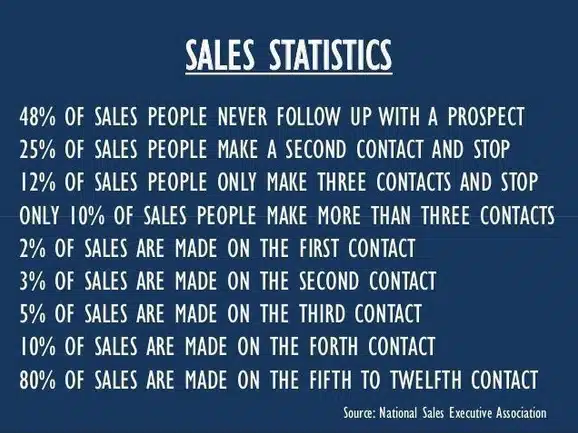
The sales industry has long understood that persistence is profitable. Data consistently shows that the majority of sales—or in this case, freelance contracts—are secured after multiple points of contact.
Industry statistics indicate that:
- 2% of sales occur at the first point of contact.
- 3% of sales occur at the second.
- 5% of sales occur at the third.
- 10% of sales occur at the fourth.
- 80% of sales are made between the fifth and twelfth contact.
When you view these numbers, the "one email and done" approach appears mathematically flawed. By stopping after the first attempt, you are effectively ignoring 98% of the potential success rate of your outreach efforts. The data is clear: the money is in the follow-up.
Expert Perspectives on Professional Outreach
Professional consultants in the freelance space, such as Sean Ogle, founder of Location Rebel, emphasize that follow-ups are a service to the client, not an annoyance.
"In most cases, when you’re following up, you’re actually doing the other person a favor," Ogle notes. "If I’m at a point where what they’re offering isn’t something I need, I’ll ignore it. I get too many emails to respond to every single one. But if that person follows up on a regular basis, there’s a good chance I’ll be interested somewhere down the line."
This perspective shifts the focus from the freelancer’s anxiety to the client’s convenience. By staying top-of-mind, you save the client the trouble of having to "go out and find" a writer when a project suddenly lands on their desk. You have already established yourself as the reliable, persistent, and professional option waiting in their inbox.
Implications for Your Freelance Career
The implications of mastering the follow-up are profound. First, it stabilizes your income. By building a pipeline of contacts who know your name and your value, you stop the "feast or famine" cycle that plagues many freelancers.
Second, it differentiates you from the "bottom feeders." There is a massive volume of low-quality, AI-generated, or generic spam emails currently clogging up marketing managers’ inboxes. By taking the time to write a human-to-human, personalized follow-up, you immediately signal that you are a high-level professional who values relationships.
Leveraging Technology to Stay Organized
The biggest barrier to consistent follow-ups is organizational friction. If you rely on memory, you will inevitably fail. Modern freelancers must utilize systems to track their outreach:
- CRMs (Customer Relationship Management): Tools like Streak for Gmail allow you to track email opens and set automatic reminders to follow up. It essentially acts as a personal assistant, ensuring no lead falls through the cracks.
- AI Integration: Large Language Models like ChatGPT or Claude can be used to track outreach history. By inputting your contact logs, you can ask the AI to generate a list of "who needs a follow-up today," turning a daunting administrative task into a five-minute morning routine.
- The "Easy Out": As a best practice, conclude your follow-ups with an "easy out"—a phrase that gives the prospect permission to say no or tell you they aren’t interested. This lowers the pressure for the recipient and increases the likelihood that they will respond, even if just to tell you "not right now."
Conclusion: The Persistence Advantage
The difference between a struggling freelancer and a thriving one is rarely the quality of their writing alone—it is their tenacity. Writing is a business, and like any business, it requires active, consistent, and professional sales efforts.
By internalizing the reality that most prospects are not ignoring you because they dislike you, but rather because they are busy, you can strip the emotional sting out of the process. Adopt a system, embrace the cadence of the follow-up, and commit to being the person who stays on the radar. In an industry where everyone else is giving up after the first email, your persistence will be your greatest competitive advantage.
 Asep Darmawan
  Raul Delapena Setiawan
  Asro
Asro 