

In the current digital landscape, the freelance writing industry has undergone a seismic shift. While cold pitching and freelance job boards were once the primary gateways to a steady income, the pendulum has swung decisively toward inbound lead generation. Today, one platform stands as the undisputed king of professional networking and client acquisition: LinkedIn.
For the modern freelancer, LinkedIn is no longer just a digital resume; it is a high-octane engine for business growth. With over 40,000 students having navigated the Location Rebel freelance writing course, the consensus is clear: those who fail to curate their professional presence on LinkedIn are effectively leaving money on the table.
The Evolution of the Professional Network: Main Facts
LinkedIn has evolved from a repository for job seekers into a sophisticated content-marketing ecosystem. Businesses—from lean startups to multinational corporations—now prioritize "thought leadership" when vetting contractors. They are not merely looking for someone who can string sentences together; they are looking for subject matter experts who understand their specific industry pain points.
The primary advantage of LinkedIn is its focus. Unlike Instagram or TikTok, where content is often ephemeral or entertainment-driven, LinkedIn is inherently business-centric. When a marketing director or a founder scrolls through their feed, they are looking for solutions, strategic insights, and vetted talent. If you can position your profile as a beacon of expertise, you transition from being a "commodity writer" to a "strategic partner."
A New Era of Algorithmic Success
To succeed on LinkedIn, one must understand that the platform’s "rules of the road" have changed. The algorithmic landscape is now heavily skewed toward relevance over reach.
- What the Algorithm Rewards: The current iteration of the LinkedIn algorithm prioritizes "dwell time"—the amount of time a user spends reading your post. It favors long-form text posts that spark genuine discussion, native video content that provides immediate value, and consistent engagement in the comments section.
- What Gets Penalized: Conversely, the platform punishes "clickbait," the over-reliance on external links that pull users off the site, and engagement-baiting (such as "like this if you agree" posts). To stay in the good graces of the algorithm, focus on content that keeps users on the platform while providing tangible value.
Five Strategic Pillars for LinkedIn Mastery
If you are ready to pivot your career and secure consistent, high-paying work, you must adopt a structured approach. Here are five strategies to dominate your niche.
1. Shift Your Target Audience: Stop Writing for Peers
A common trap for novice freelancers is falling into the "echo chamber." They spend their time connecting with other writers, sharing tips on how to find work, and commenting on posts about the craft of writing. While this is great for camaraderie, it does nothing for your bottom line.
The Strategy: Audit your last ten posts. If your content is exclusively about "writing tips," you are marketing to your competition, not your clients. Identify three to five pillars of expertise relevant to your ideal client. For example, a fintech writer should focus on regulatory compliance, market volatility, or the evolution of digital payments. When a prospective client lands on your profile, they should immediately perceive you as an expert in their industry, not just a freelancer looking for a gig.
2. Overcoming the "Posting Anxiety" Barrier
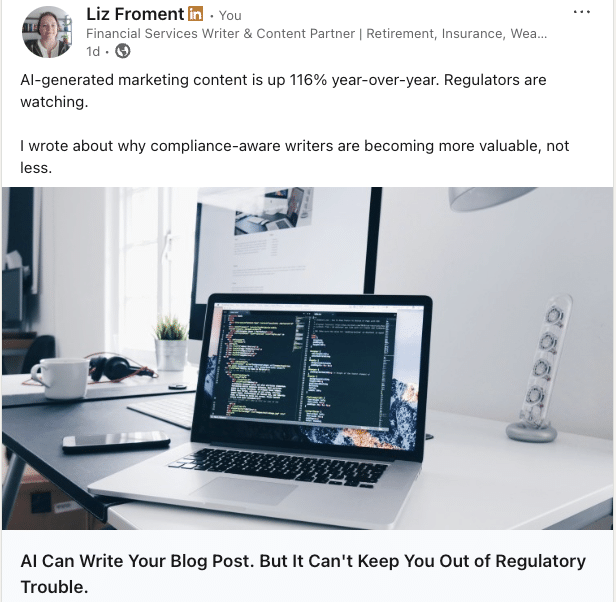
The pressure to post daily is a major contributor to the burnout that keeps talented writers from building a brand. The reality is that consistency is far more important than frequency.
The Strategy: Adopt a manageable cadence. Posting twice a week—such as every Tuesday and Thursday—is sufficient to maintain visibility. Block 30 minutes on Sunday to outline your content for the week. Utilize LinkedIn’s native scheduling tool to automate your output. When you remove the daily stress of "what to post," you improve the quality of your writing and ensure that you never miss a week.
3. "Walking the Marketing Dog": The Art of Engagement
Content creation is only half the battle. In the early stages of building your presence, active engagement is actually more important than your own posts.
The Strategy: Adopt the "walk the marketing dog" method. Treat your engagement as a daily non-negotiable ritual. Create a list of 20 to 30 dream clients—marketing managers, editors, and founders. Spend 15 minutes daily reading their content and leaving insightful, value-driven comments. Avoid generic praise like "Great post!" Instead, add a unique perspective, ask a thoughtful follow-up question, or share a relevant data point. This keeps your name in front of the people who hold the purse strings.

4. Optimize Your Profile as a High-Converting Sales Page
Your profile is your digital storefront. If a client visits your page, they should see a clear value proposition, not a generic bio.
The Strategy:
- The Headline: Move beyond "Freelance Writer." Use a client-centric headline, such as: "B2B SaaS Content Writer | Helping FinTech companies translate complex data into high-converting articles."
- The About Section: Write this in the second person. Speak directly to the client’s needs. What problems do you solve? What results can you guarantee?
- The Featured Section: Pin your best work, case studies, or testimonials. This is your social proof.
- Experience Section: Quantify your impact. Rather than saying you "wrote articles," note that you "wrote 50+ articles for Client X that resulted in a 20% increase in organic search traffic."
5. Building an "Idea Brain"
Writer’s block is a symptom of poor preparation. To avoid the blank-page syndrome, you need a system for capturing ideas as they happen.
The Strategy: Every morning, force yourself to jot down 10 ideas in a notes app. They don’t have to be perfect; they just have to be captured. By the end of the week, you will have 70 ideas. Even if 90% are mediocre, you are left with 7 high-quality concepts to develop into posts. If you are truly stuck, use AI writing tools to generate prompts, then use your human expertise to expand and refine them into authoritative content.

Supporting Data and Industry Implications
The transition to LinkedIn-based freelancing is supported by changing hiring behaviors. According to recent industry surveys, nearly 80% of hiring managers and content directors now perform a "social audit" of a candidate’s LinkedIn presence before extending an offer.
The implications are clear: the "old" way of finding work is dying. Cold emails still have their place, but they are increasingly treated as outbound spam. Conversely, an optimized LinkedIn profile acts as an inbound magnet. When a client finds you through your content, they are already "pre-sold" on your authority. This shifts the power dynamic of the negotiation, often allowing you to command higher rates because you are perceived as a specialist rather than a generalist.
Conclusion: The Path to $1,000 and Beyond
Making your first $1,000 as a freelance writer is not about luck; it is about infrastructure. By committing 20 to 30 minutes a day to the strategies outlined above—optimizing your profile, engaging with prospects, and sharing consistent, industry-relevant content—you build a sustainable foundation for your business.
Remember, the goal of these efforts is twofold: client acquisition and network security. By becoming a fixture in your niche, you not only attract clients but also gain the benefit of referrals from peers and long-term career stability. Do not delay your entry into this space. The platform is waiting, the clients are listening, and with the right strategy, your freelance writing business can move from a side hustle to a high-earning career.
 Asep Darmawan
  Raul Delapena Setiawan
  Asro
Asro 