

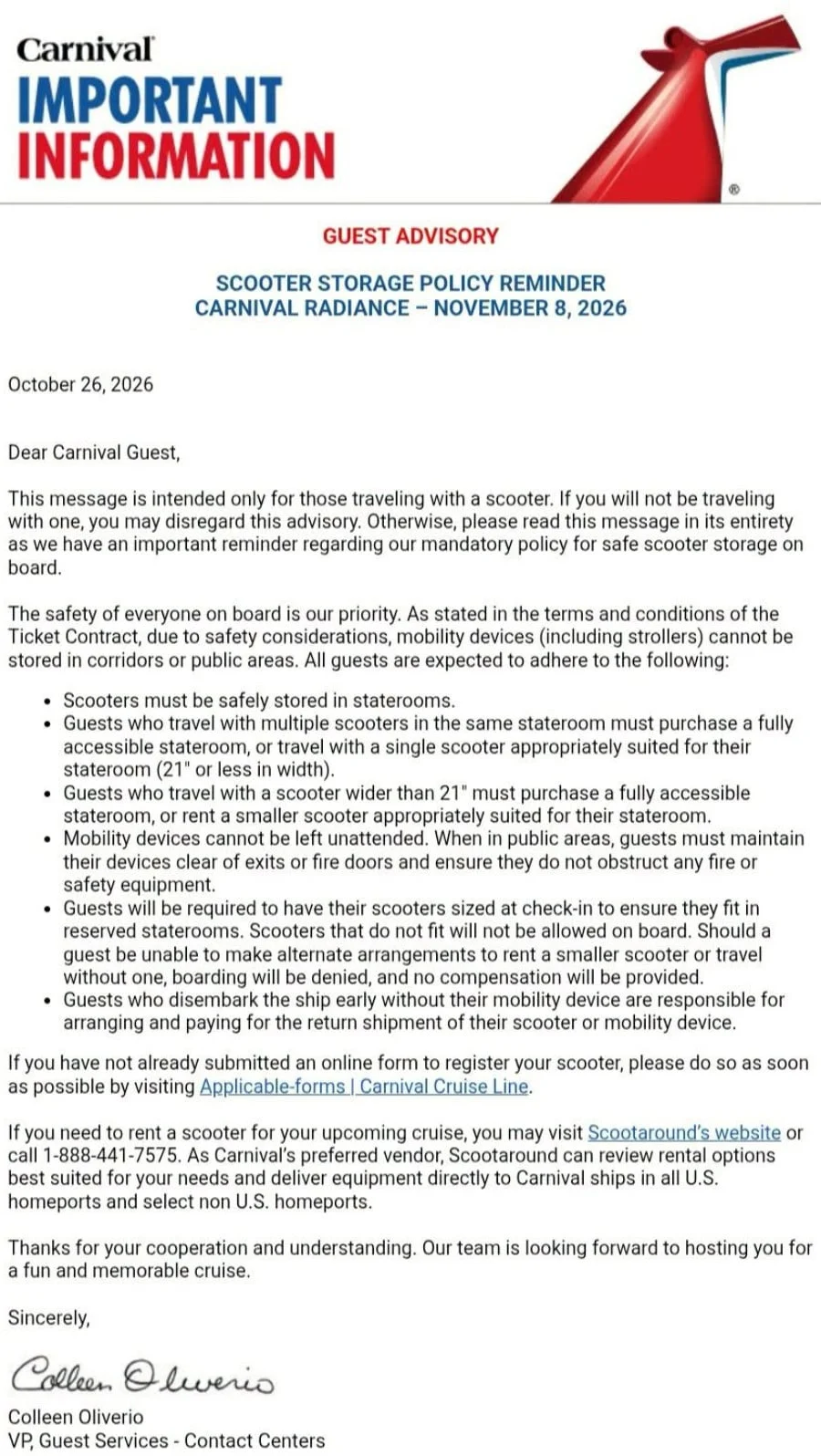
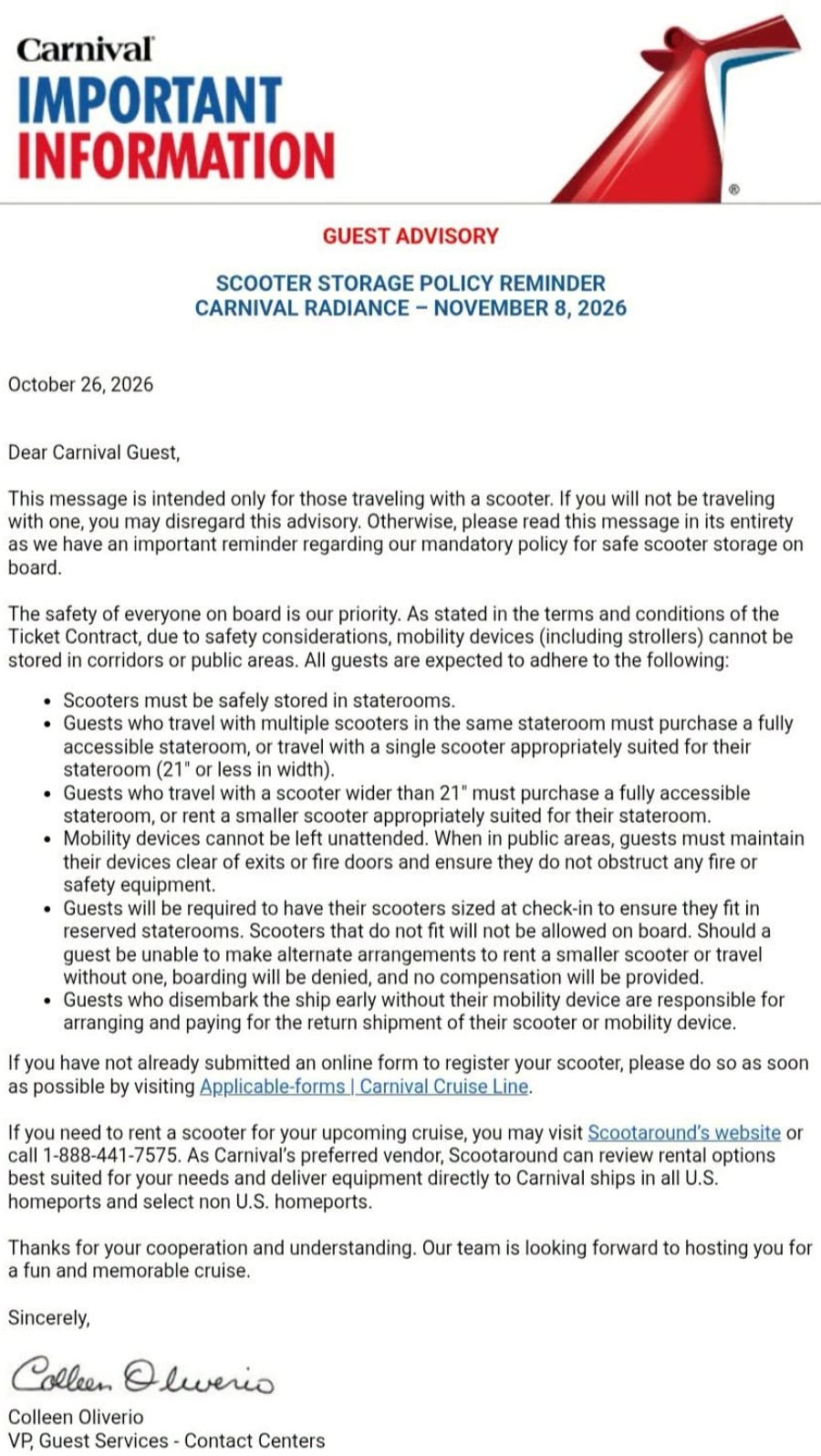
LONG BEACH, CALIFORNIA — In an ongoing effort to balance passenger accessibility with strict maritime safety regulations, Carnival Cruise Line has stepped up its proactive communication regarding mobility equipment onboard its fleet. Travelers booked on upcoming voyages—including guests preparing for the November 8, 2026, departure of Carnival Radiance—have begun receiving targeted pre-cruise advisories outlining the strict protocols governing mobility scooters.
While Carnival’s core policies regarding mobility devices remain fundamentally unchanged, the timing and direct nature of these communications underscore the cruise line’s zero-tolerance stance on hallway clutter, fire hazards, and improper stateroom sizing. As cruise ships navigate increasingly high occupancy rates, managing the logistics of motorized scooters has become a critical operational priority for major cruise operators.
Main Facts: The Core of Carnival’s Scooter Policy
The pre-cruise advisory, dispatched approximately two weeks prior to embarkation, serves as a direct wake-up call for passengers relying on mobility scooters. The communication is specifically targeted at travelers who intend to bring motorized devices, ensuring they are well-acquainted with Carnival’s mandatory safety storage and sizing mandates before arriving at the cruise terminal.
At the heart of the policy are three non-negotiable rules regarding space and equipment dimensions:
- Stateroom Storage Exclusivity: Mobility scooters must be stored exclusively inside the guest’s stateroom. Under no circumstances are scooters permitted to be parked, charged, or left unattended in public hallways, corridors, or general public areas, as these spaces serve as vital emergency evacuation routes.
- The 21-Inch Width Rule: Any guest operating a scooter that measures wider than 21 inches is strictly required to book a fully accessible stateroom. Standard stateroom doors and layouts cannot safely accommodate wider equipment without blocking emergency egress.
- Multiple Devices: If a traveling party intends to keep more than one scooter inside a single stateroom, they must also book a fully accessible cabin to ensure adequate maneuvering space.
Furthermore, Carnival has mandated that all scooters be physically evaluated and sized at check-in inside the cruise terminal.
"This message is intended only for those traveling with a scooter," the advisory explicitly states. "Guests will be required to have their scooters sized at check-in to ensure they fit in reserved staterooms. Scooters that do not fit will not be allowed on board. Should a guest be unable to make alternate arrangements to rent a smaller scooter or travel without one, boarding will be denied, and no compensation will be provided."
Chronology: The Evolution of Carnival’s Accessibility Focus
The reinforcement of these boarding policies is the latest chapter in a long-standing dialogue between Carnival Cruise Line and its passengers regarding mobility assistance devices. Over the past several years, the intersection of passenger independence, accessibility rights, and shipboard safety has created logistical challenges that cruise administrators have had to address systematically.
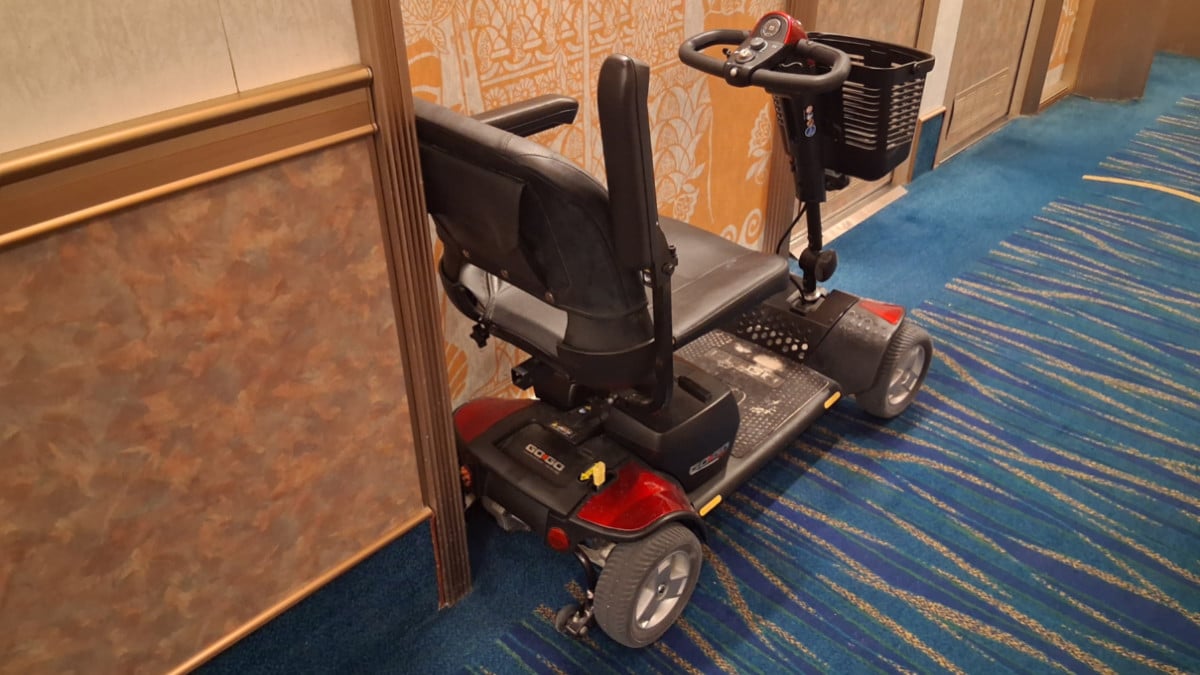
- Pre-2023: As mobility scooters grew more popular and commercially available, cruise lines began noticing an influx of oversized, heavy-duty machines. Hallways frequently became congested, prompting initial crackdowns on corridor parking.
- 2024–2025: Carnival streamlined its digital documentation processes, heavily promoting the online Mobility Devices Form. This registration portal requires passengers to disclose device specifications, power sources, and stateroom types prior to sailing.
- September 2025: A high-profile incident occurred when a passenger departing on a Belize itinerary complained that crew members refused to carry their scooter onto a tender boat while the passenger remained seated inside it. Carnival Brand Ambassador John Heald quickly addressed the situation, clarifying that while crew members are permitted to lift and stow empty scooters for safety reasons, they cannot transport a device with a passenger occupying it due to extreme liability and tipping risks.
- Late 2025 – 2026: Carnival formalized its terminal-sizing protocols. Rather than letting oversized scooters get discovered onboard—where correcting the issue is virtually impossible—the cruise line empowered terminal agents to measure equipment right at check-in, preventing boarding for non-compliant devices.
- November 2026 (Current Context): Passengers booked on extended voyages, such as the 14-night Carnival Radiance Carnival Journeys Hawaii itinerary departing from Long Beach, California, received explicit, mandatory email notifications two weeks before sailing to prevent last-minute terminal disruptions.
Supporting Data and Procedural Requirements
To ensure compliance, Carnival mandates that all guests traveling with motorized assistance complete a multi-step administrative process well before reaching the port.
The Online Mobility Devices Form
The foundation of Carnival’s pre-cruise screening is the Mobility Devices Form, hosted directly on the cruise line’s official website. This questionnaire collects vital data points necessary for safety management:
- Device Classification: Identifying whether the equipment is a standard manual wheelchair, a three-wheel travel scooter, or a heavy-duty four-wheel motorized scooter.
- Power Source Specifications: Noting battery chemistry (such as sealed lead-acid or lithium-ion), which is critical for marine fire safety and compliance with international maritime dangerous goods regulations.
- Guest Mobility Level: Evaluating whether the passenger is fully ambulatory, semi-ambulatory, or non-ambulatory, which assists shipboard medical and guest services teams in understanding emergency evacuation needs.
- Stateroom Assignment: Cross-referencing the guest’s booked cabin category with the reported dimensions of their mobility equipment to preemptively flag potential spatial conflicts.
Terminal Screening and Rejection Rates
During embarkation, terminal staff utilize standardized measuring templates. Scooters exceeding the 21-inch width threshold for standard cabins—or those that cannot be safely maneuvered through the stateroom doorframe—fail inspection. Because Carnival’s policy dictates that boarding will be denied without financial compensation for non-compliant devices, the cruise line heavily emphasizes early self-measurement and rental pre-planning via trusted third-party providers who deliver directly to the ship.
Official Responses and Stakeholder Perspectives
The balancing act between enforcing maritime law and accommodating passengers with disabilities has elicited varied responses from cruise passengers, crew members, and accessibility advocates.
Carnival Cruise Line’s Stance
Carnival’s leadership, frequently fronted by Brand Ambassador John Heald on social media, maintains that safety and regulatory compliance must take precedence. SOLAS (Safety of Life at Sea) regulations strictly prohibit the obstruction of fire doors, evacuation pathways, and muster stations. Leaving a bulky mobility scooter parked outside a cabin door in a narrow hallway is treated as a major safety violation.
In official correspondence, the cruise line has emphasized that these measures protect all passengers: "These proactive reminders ensure guests are aware of the policy and there will be no confusion about how scooters are evaluated at boarding and what the onboard expectations may be."
Passenger Reactions
The passenger community remains divided. Many regular cruisers and mobility device users applaud the crackdown, arguing that abandoned or improperly parked scooters frequently block hallway transit for housekeeping carts, room service trays, and fellow passengers during emergencies.
Conversely, some travelers express anxiety regarding the strictness of the terminal evaluations. The risk of being denied boarding without a refund creates high-stakes pressure for travelers who rely on their specific personal equipment for daily independence. Advocacy groups have consistently stressed the importance of clear communication, early deadline transparency, and accessible rental options to ensure disabled travelers are not unfairly marginalized by rigid infrastructure limitations.
Implications: Operational Changes and Extended Voyage Considerations
The nuanced guidelines provided in Carnival’s latest advisories also address less common scenarios, such as medical emergencies and early disembarkation.
Early Disembarkation and Emergency Evacuations
An unexpected inclusion in the recent pre-cruise advisories details the logistics of leaving a mobility device behind if a guest must exit the ship prematurely.
"Guests who disembark the ship early without their mobility device are responsible for arranging and paying for the return shipment of their scooter or mobility device," the email notes.
While the advisory does not elaborate explicitly, cruise industry analysts note this policy primarily applies under two distinct emergency circumstances:
- Medical Evacuations: If a passenger experiences a severe medical crisis requiring a mid-cruise airlift or emergency transfer to a local hospital via port medical personnel, baggage and large mobility devices cannot accompany the patient.
- Missed Port Departures: If a guest fails to return to Carnival Radiance before the designated all-aboard time at a port of call—thereby missing the ship—the abandoned scooter left inside the stateroom must be processed, packed, and shipped back to the owner at their personal expense.
Broader Industry Trends
As cruise ships scale in size and passenger demographics broaden to include more multi-generational families and aging travelers, the management of mobility devices will remain a central challenge for the cruise industry. Carnival’s proactive stance—combining digital pre-screening, mandatory online forms, terminal sizing checkpoints, and explicit warnings—serves as an evolving blueprint for balancing accessibility rights with the uncompromising demands of maritime safety.
 Dwi Wanna
 Nila Kartika Wati
 Asep Darmawan
