Published on October 26, 2026 By Global Hospitality & Design Correspondent
Main Facts
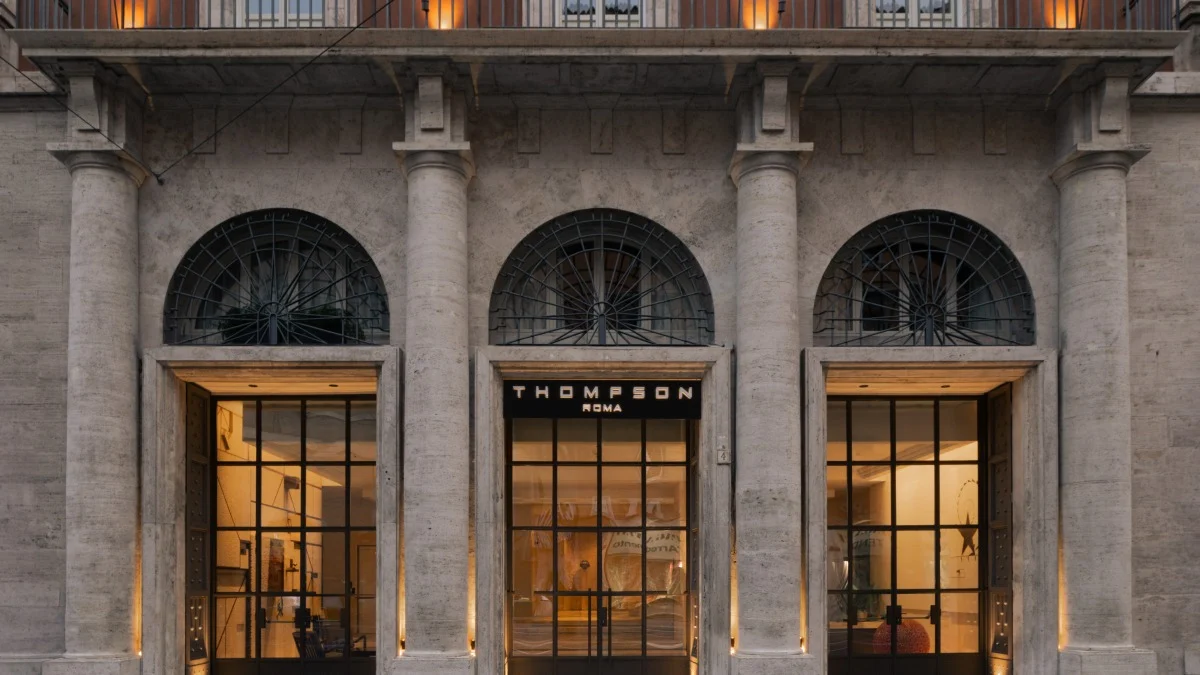
The landscape of luxury hospitality in Italy’s capital has officially shifted. Thompson Hotels, a dynamic lifestyle brand under the Hyatt umbrella, has made its grand entry into the Eternal City with the highly anticipated opening of the Thompson Rome. Situated inside a meticulously restored landmark structure originally built in the 1940s, the property bridges the gap between mid-century architectural heritage and contemporary Italian art and design.
Positioned as an art-focused sanctuary rather than a standard corporate hotel, Thompson Rome aims to redefine what travelers expect from a high-end Roman getaway. Rather than leaning strictly on classical Roman antiquity—a motif heavily saturated across the city’s historic center—the hotel boldly embraces a sleek, mid-century modernist aesthetic while championing contemporary Italian creatives. Featuring curated galleries of localized art, bespoke furnishings, and world-class culinary concepts, the property establishes a new benchmark for experiential luxury in one of the world’s most visited cultural hubs.
Chronology: The Journey to Thompson Rome
The realization of the Thompson Rome project represents years of meticulous planning, architectural preservation, and interior curation.
The 1940s: Architectural Genesis
The story begins in the turbulent yet architecturally transformative era of 1940s Rome. The building that now houses the hotel was originally constructed during a period of urban evolution that saw rationalist and modernist design principles begin to seep into the traditionally baroque and classical fabric of the city. For decades, the structure served varied civic and commercial purposes, its robust bones standing as a testament to mid-century Italian engineering. However, as the decades passed, the building fell into relative obscurity, awaiting a visionary developer to unlock its hidden architectural potential.
The Acquisition and Vision (Early 2020s)
Hyatt Hotels Corporation, alongside its development partners, identified the property as an ideal canvas for the Thompson brand. The vision was clear: to take a significant piece of 20th-century Roman architecture and adapt it for the 21st-century luxury traveler. The project required stripping away decades of ad-hoc renovations to reveal the building’s original structural integrity, high ceilings, and expansive spatial flow.
The Restoration and Design Phase (2024–2026)
Over a two-year intensive development cycle, a team of preservationists, structural engineers, and interior designers worked in tandem to restore the landmark. The goal was not merely restoration, but a delicate dialogue between past and present. Original terrazzo floors, geometric window frames, and structural columns were restored, while state-of-the-art hospitality infrastructure was seamlessly integrated behind the scenes.
The Grand Opening (October 2026)
Doors officially opened to the public in late October 2026. The launch event welcomed international tastemakers, design critics, and cultural figures, instantly positioning the hotel as the autumn season’s most talked-about European hospitality opening.
Supporting Data & Architectural Overview
To understand the scale and ambition of the Thompson Rome, one must look closely at its design specifications, room counts, and integration into the local neighborhood.
Property Heritage: A fully restored 1940s landmark building, blending Rationalist architectural lines with contemporary Italian flair.
Design Philosophy: Art-centric, featuring site-specific installations, commissioned pieces by emerging Italian artists, and custom mid-century modern furniture lines.
Accommodations: A curated collection of guest rooms and suites designed as residential-style sanctuaries, complete with artisanal minibars, custom lighting, and plush textiles that reflect the warm, earthy palette of the Mediterranean.
Public Spaces: Multiple communal art lounges, a library dedicated to Italian design and cinema, rooftop viewing terraces, and gastronomic venues helmed by acclaimed local chefs.
Global Brand Context: The property joins a selective, globally recognized portfolio of Thompson hotels known for vibrant social spaces, hyper-local design integration, and a sophisticated urban-explorer ethos.
Official Responses and Stakeholder Perspectives
The launch of Thompson Rome has generated substantial buzz within both the hospitality industry and the local Roman community. Executives and designers have shared their insights on the challenges and triumphs of bringing this vision to life.
The Hyatt and Thompson Leadership Perspective
In official statements surrounding the launch, Hyatt executives emphasized the strategic importance of Rome within their broader European expansion plan.
"Rome is a city with an immutable historical identity, but it is also a living, breathing contemporary metropolis," said a representative for Hyatt’s luxury brand division. "With Thompson Rome, we wanted to honor the city’s rich past without getting trapped in a historical time capsule. The 1940s architecture provided us with a unique narrative framework—one that celebrates a lesser-known, highly stylish era of Roman design. This hotel is a love letter to Italian creativity, past and present."
The Design and Art Curators
The creative team behind the interior spaces noted that every corner of the hotel was treated as a gallery wall or a stage for human interaction.
"We didn’t want guests to feel like they were staying in a museum where they couldn’t touch anything," shared the lead interior designer for the project. "Instead, we curated a space where art is lived with. From the bronze door handles to the grand light fixtures in the lobby, every piece tells a story of Italian craftsmanship. We worked exclusively with local artisans, metalworkers, and textile weavers to ensure the soul of Rome is embedded in every square foot."
Implications: What Thompson Rome Means for the Capital’s Luxury Market
The arrival of the Thompson Rome property carries several notable implications for the travel sector, local tourism dynamics, and the evolution of Roman interior design.
1. Diversifying Rome’s Luxury Offerings
For decades, luxury hospitality in Rome was synonymous with grand heritage hotels draped in heavy neoclassical or baroque decor. While these grand dames of Roman tourism hold an undeniable allure, the modern luxury traveler increasingly seeks authenticity paired with contemporary comfort. Thompson Rome proves that visitors are eager for alternatives that speak the design language of the 20th and 21st centuries. By highlighting the 1940s era—a period often overshadowed by either antiquity or the Renaissance—the hotel carves out a fresh, distinctive niche.
2. Supporting the Local Creative Economy
By prioritizing partnerships with contemporary Italian artists, furniture makers, and culinary talents, the hotel acts as an economic and cultural incubator. Rather than importing global luxury mega-brands for its interior fittings, the property roots itself firmly in the local ecosystem. This approach satisfies the modern consumer’s demand for hyper-localization and ethical luxury travel.
3. Setting a Precedent for Adaptive Reuse
From an urban planning perspective, Thompson Rome serves as a shining example of adaptive reuse. In historic cities like Rome, where new construction is heavily restricted and often environmentally taxing, breathing new life into mid-century architectural landmarks offers a sustainable path forward for the hospitality industry. It demonstrates that historic preservation does not have to mean stagnation; rather, older buildings can be successfully repurposed to meet the high-tech, high-design demands of contemporary travelers.
Conclusion
The debut of Thompson Rome marks a defining moment for the brand and the city it now calls home. By successfully fusing a rehabilitated 1940s architectural landmark with a vibrant, art-forward ethos, the property transcends the traditional boundaries of a hotel stay. It offers an immersive cultural experience that challenges visitors to see Rome through a different lens—one polished by mid-century elegance and illuminated by the best of contemporary Italian creativity. As travelers increasingly seek substance, style, and a genuine connection to their destinations, Thompson Rome stands ready to lead the charge into a bold new era of Eternal City hospitality.




 Evan Lee Salim
 Nana
 Basiran
